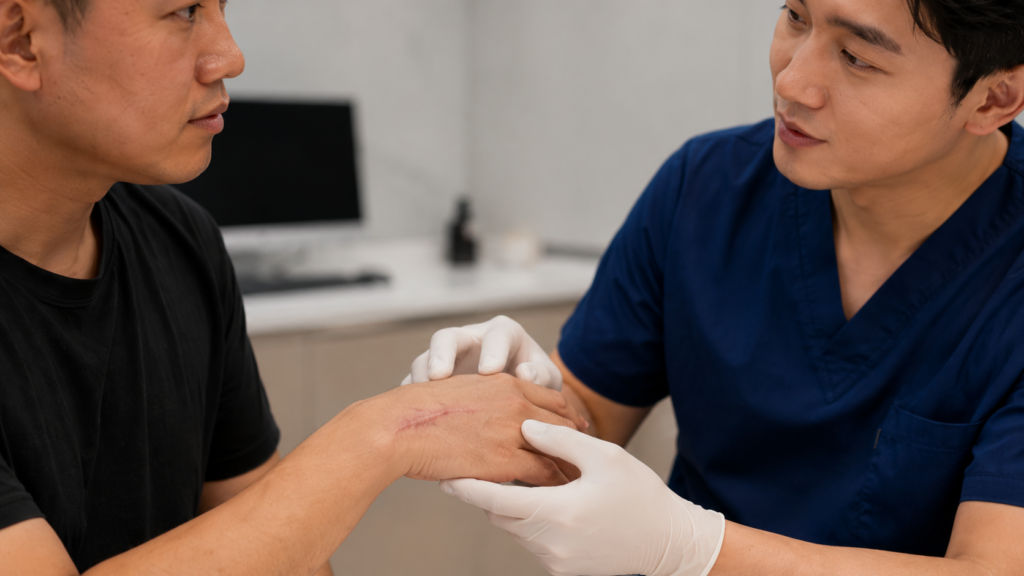
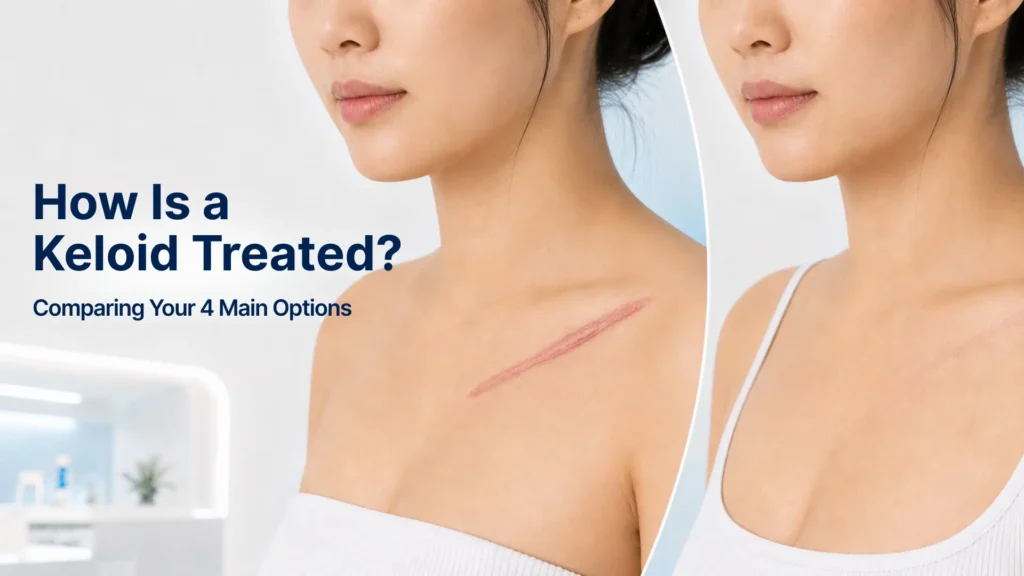
How Is a Keloid Treated? Comparing Your 4 Main Options
There’s no single “right” way to treat a keloid. Most doctors choose from four main approaches, steroid shots, freezing, pressure, or surgery, often combining two or more depending on the keloid’s size, location, and how it’s responded to treatment before. Here’s what each one actually involves, and what to realistically expect.
Quick Comparison: Which Treatment Fits Which Situation?
Steroid Shots
A doctor injects steroid medicine directly into the keloid, usually every few weeks over several visits. Over time, this tends to soften and flatten the raised tissue.
It’s often the first thing tried on a smaller or newer keloid, partly because it doesn’t require surgery or downtime. The trade-off is that it takes multiple visits spaced weeks apart, and the scar can still come back once injections stop.
One thing worth knowing if you have darker skin: the injection site can sometimes lighten in color compared to the skin around it. This tends to fade over time, but it’s a real possibility worth asking your doctor about before starting.
Freezing the Scar (Cryotherapy)
Cryotherapy uses extreme cold, usually liquid nitrogen, to freeze the keloid tissue. This damages the raised tissue enough that it can flatten over the following weeks.
It’s commonly paired with a steroid shot in the same visit, since the two together tend to work better than either alone. Like steroid injections, freezing can lighten the skin at the treated spot, and this effect can be more noticeable on darker skin tones.
Pressure Therapy
This means keeping steady pressure on the scar, using a silicone sheet, a pressure garment, or (for earlobe keloids) a specially fitted clip, worn for months at a time.
Pressure therapy is most useful as prevention, right after a piercing or injury in someone who tends to form keloids, or as a supporting step after another treatment, rather than as a way to treat an existing large keloid on its own. It asks the most of you day to day: it only works if it’s worn consistently, for months, which is worth being honest with yourself about before committing to it.
Surgery, Usually Combined With Something Else
Surgery means a doctor cuts the raised tissue down. On its own, keloids very commonly grow back after surgery, sometimes larger than before, because the surgery itself can trigger the same overactive healing response that caused the keloid in the first place.
Because of this, surgery is typically paired with a follow-up treatment right after, either steroid injections or a short course of low-dose radiotherapy aimed specifically at the scar site. This combination is associated with a meaningfully lower chance of the keloid returning compared to surgery by itself. (Note: this radiotherapy is a targeted, low-dose treatment used for scar control, not the same thing as radiotherapy used for cancer.)
Because surgery followed by radiotherapy or injections is a more involved plan, it’s typically handled by a plastic surgeon or a dermatologist experienced specifically in keloid care, working together with whoever delivers the follow-up treatment.
Why Doctors Often Combine More Than One Method
Keloids form because the body’s healing response doesn’t switch off the way it should. Every option above works on a different part of that process, so combining two approaches, like surgery plus injections, or freezing plus a steroid shot, tends to lower the chance of it coming back more than any single method used alone. This is why it’s common to hear a treatment “plan” described rather than a single treatment.
What Actually Determines Which Treatment a Doctor Recommends
A few things typically shape the recommendation:
- Size and location. Larger keloids, or ones on areas like the chest and shoulders that are especially prone to recurrence, more often need surgery combined with a follow-up treatment.
- How long it’s been there, and what’s already been tried. A keloid that hasn’t responded to injections alone may be a better candidate for surgery plus radiotherapy.
- Skin tone. Because pigment changes are a real side effect of several of these treatments, this is worth discussing directly, especially for darker skin tones where the effect tends to be more visible.
- How many follow-up visits are realistic for you. Some of these options need repeat visits over weeks or months; others are closer to a single procedure with a shorter follow-up window. This is a fair thing to raise with your doctor when comparing options.
Not sure which of these fits your situation?
See who should treat itOr skip ahead: send a photo and we’ll get a doctor’s initial take on which path makes sense. Message us with a photo