 Hospital
You You We, Go Go Go!
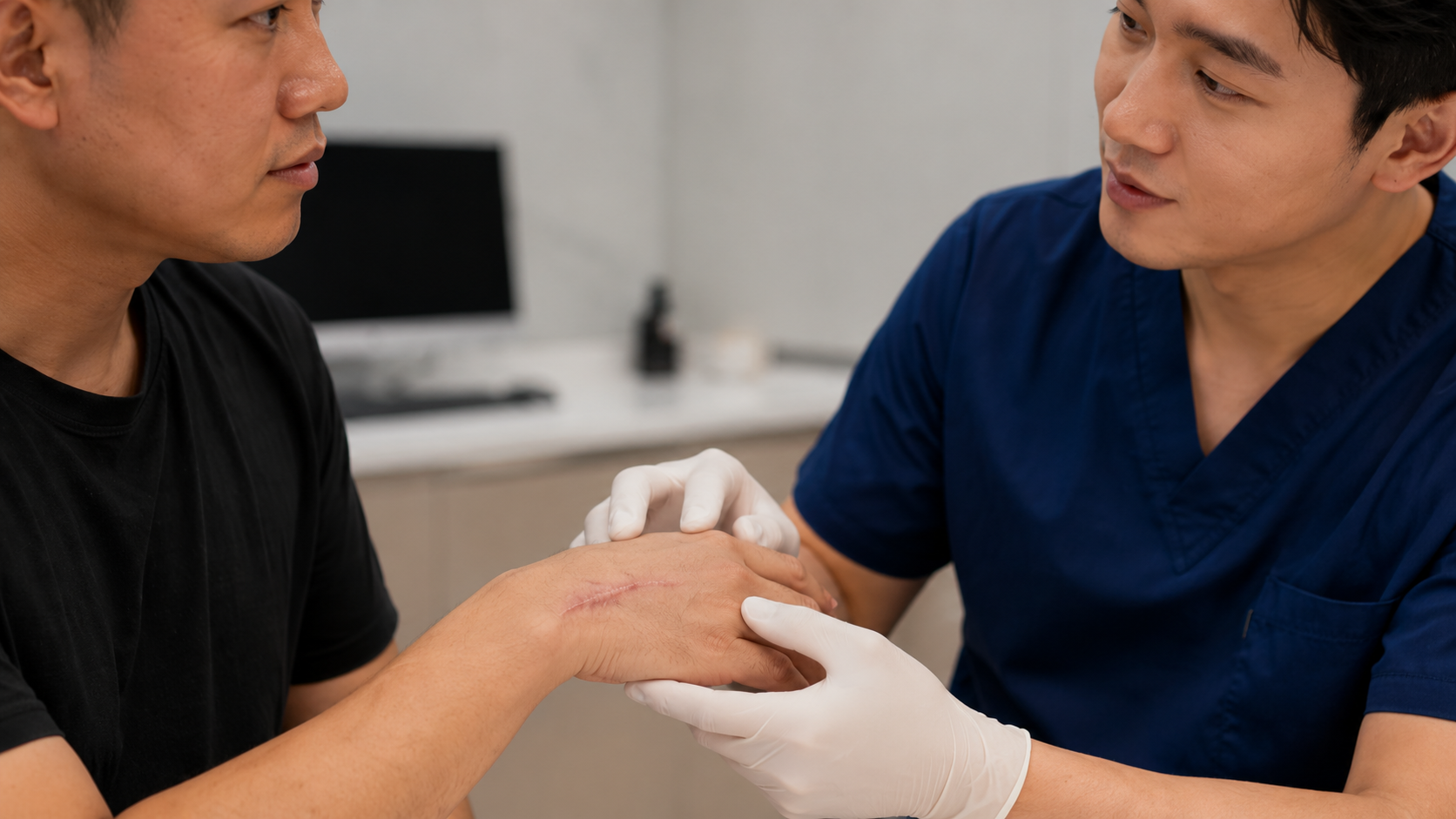
Scar & Keloid Revision
Also known as:
- Hypertrophic Scar Treatment
- Keloid Treatment
Recovery
- Non-Surgical (Injections/Laser): Zero downtime; mild redness for 24–48 hours
- Surgical Revision: 1–2 weeks of recovery; sutures are usually removed within 7–10 days
Considering Scar & Keloid Revision?
Compare transparent pricing from vetted specialists in minutes.
About Scar & Keloid Revision
Treated areas:
- Body
- Scars
SCAR & KELOID REVISION: Smooth • Flatten • Refine
Expert Multi-Modality Treatment to Restore Your Skin’s Texture & Comfort
Scar and Keloid revision involves a specialized combination of medical and aesthetic treatments designed to improve the appearance, texture, and symptoms of scars. While scars cannot be “erased” completely, our goal is to make them flatter, softer, lighter, and far less noticeable. We also focus on relieving physical discomfort (itching/pain) and significantly lowering the risk of recurrence.
Hypertrophic Scars vs. Keloid Scars
| Feature | Hypertrophic Scars | Keloid Scars |
| Appearance | Raised, thick, red, or firm. | Thicker, firm, and often spreading outward. |
| Growth | Stays within the original wound area. | Grows beyond the boundaries of the original wound. |
| Progression | May slowly improve on its own over time. | Can grow indefinitely; rarely improves without treatment. |
| Commonality | Common after surgery or injury. | More common in darker and Asian skin types. |
What You Will Achieve
✅ Smoother Texture: Hard or rough scar tissue becomes soft and even with surrounding skin
✅ Flatter Appearance: Significant shrinkage and flattening of raised/thickened areas
✅ Natural Colour: Fades persistent redness and helps the scar tone blend with your skin
✅ Symptom Relief: Dramatic reduction in itching, tenderness, and physical pain
✅ Improved Flexibility: Releases “tight” scars to restore better movement and flexibility
✅ Prevention: Lowered risk of the scar growing back through combined therapy
Common Treatment Options
💉 Steroid Injections: Directly flattens raised tissue and stops excess collagen formation.
✂️ Surgical Revision: Carefully removing the old scar and re-closing the skin with fine techniques for a thinner, cleaner line.
🔦 Laser Therapy: Pulsed Dye Laser for redness; Fractional CO₂ for resurfacing and smoothing texture.
❄️ Cryotherapy: Freezing small keloids (like on earlobes) to shrink and soften them.
⚛️ Radiation Therapy (SRT): Low-dose treatment post-surgery to reduce keloid recurrence to under 10–15%.
🧴 Maintenance: Use of silicone sheets and pressure therapy to keep the area hydrated and flat.
Ideal Candidate
Suitable for adults and children (with parental consent) seeking to improve old or new scars.
You are the perfect candidate if you have:
- Raised hypertrophic scars or true, spreading keloids
- Post-surgical scars that healed poorly or widely
- Scars from traumatic injuries or burns that cause tightness
- A commitment to a multi-session plan and consistent home care to prevent the scar from returning






Your Timeline
Preparation
Photograph and measure baseline lesions. Pause blood thinners 7 days before any excision. Begin silicone gel therapy 2 weeks prior if recommended. Strict sun protection on scar zones.
Followup Care
Daily silicone gel/sheet application for 3-6 months, pressure garments where indicated, SPF on scar area for 12 months, scheduled in-clinic injections every 4-6 weeks, telehealth follow-up after return home.
Frequently Asked Questions
Can keloids return after treatment?
Recurrence is possible without combined-modality care; our protocols combining excision, injection, silicone and radiation reduce recurrence rates significantly.
Is the treatment painful?
Injectable and laser sessions are well tolerated with topical numbing; surgical excision uses local or twilight anaesthesia.
Will the scar disappear completely?
Complete disappearance is rare but dramatic softening, flattening and depigmentation are expected.
· Next Step
Interested in Scar & Keloid Revision?
Connect with accredited specialists and get a personalised plan.