
What Happens If You Gain Weight After Liposuction? The 5kg Experiment
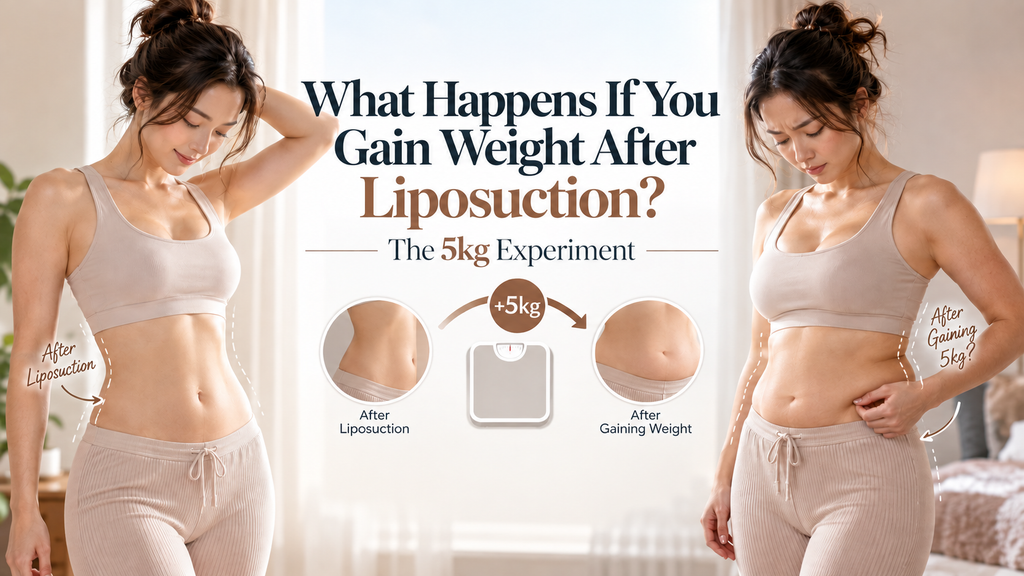
Imagine this.
You have liposuction. You recover. Your waist looks more defined, your clothes fit differently, and you finally have the body contour you were hoping for.
Then, six months later, the number on the scale is 5kg higher.
Panic?
You might immediately think:
“Did all my fat come back?”
未必。
In fact, what happens after gaining weight is more interesting than the simple idea that “the fat comes back.”
Let’s follow the 5kg.
First: Liposuction Didn’t Make You Lose 5kg
This is where many expectations go wrong.
Liposuction is not a weight-loss treatment. It is a body-contouring procedure designed to remove localized fat and change the shape and proportions of specific areas.
So if your main goal is to lose a large amount of weight, liposuction isn’t designed for that.
Think of it this way:
Weight loss changes your size.
Liposuction changes your shape.
That difference becomes very important when you think about what happens later.
The 5kg Experiment Begins
Let’s imagine two people who both have liposuction around the abdomen and waist.
After they have recovered, both are happy with their new contours.
Then both gain 5kg.
Do they necessarily end up looking exactly as they did before?
No.
And this is where one of the biggest liposuction myths begins.
Myth: “The Fat Comes Back”
听起来很有道理。
Fat was removed.
You gain weight.
Therefore, the fat must have returned.
But that’s not quite what happens.
Liposuction permanently removes fat cells from the treated area. Those particular cells do not simply grow back. However, the remaining fat cells can still enlarge if your overall body weight increases.
So rather than imagining the removed fat cells returning, think of your body as having fewer fat cells in the treated area than before.
The cells that remain can still change size.
And that distinction matters.
So Where Does the Extra Weight Go?
This is probably the question you’re really asking.
If your abdomen has fewer fat cells after liposuction, where does your body store additional fat?
It doesn’t follow a fixed map.
Fat can accumulate in different parts of the body depending on factors such as genetics, sex, hormones, age and overall weight gain.
That means you might notice changes in areas that were not treated.
For example, someone who previously carried most of their excess fat around the abdomen may notice more fullness elsewhere after substantial weight gain.
This can create the impression that:
“The fat moved.”
But fat isn’t literally travelling from your stomach to your arms overnight.
Your body is simply storing excess energy in the fat cells that remain throughout the body.
Now Let’s Change the Experiment
The interesting part isn’t simply whether you gain weight.
It’s how much 和 what happens over time.
Gain a little weight
A small fluctuation may not dramatically change your contours.
You may still notice the difference created by liposuction because the treated area has fewer fat cells than before.
Gain a moderate amount
Your body shape can gradually become softer.
The definition created by liposuction may become less noticeable as remaining fat cells enlarge.
Gain a significant amount
Now the changes can become much more obvious.
Substantial weight gain can affect the treated areas as well as untreated parts of the body, potentially reducing the contouring effect you originally achieved.
So the idea that:
“Liposuction means I can never gain fat there again”
is a myth.
But so is:
“One small weight increase will completely destroy my results.”
Neither tells the whole story.
What If the Scale Barely Changes After Liposuction?
Here’s another situation that confuses people.
You look slimmer.
Your waist is smaller.
Your clothes fit differently.
But you step onto the scale…
Almost nothing has changed.
Did liposuction fail?
No.
You may simply be measuring the wrong thing.
Liposuction is about contour, not chasing a particular number on the scale.
And if you had fat removed from one area and then had some of that fat used for fat transfer, the number on the scale becomes even less useful for judging the result.
Wait… Does Fat Transfer Cancel Out the Weight Loss?
Suppose fat is removed from your abdomen or thighs and then transferred to another part of your body.
您可能想了解
“If the fat was removed, why didn’t my weight drop more?”
Because fat transfer is essentially a redistribution process.
Fat is harvested from one part of the body and transferred to another area for enhancement.
So if fat is removed from your abdomen and transferred elsewhere, you shouldn’t expect the scale to show the full amount of fat that was harvested as permanent weight loss.
The goal is not:
Remove fat → lose lots of weight.
It is closer to:
Remove unwanted fullness → use selected fat for another purpose → reshape overall proportions.
That’s why someone can look noticeably different without seeing a dramatic change in their body weight.
Then What Actually Causes Weight Gain After Liposuction?
The procedure itself isn’t a magic shield against future weight gain.
Your body continues to respond to the same things it did before.
例如
Your eating habits change
If your calorie intake regularly exceeds what your body uses, fat can accumulate over time.
You become less active
A change in work, routine, lifestyle or activity level can gradually affect body weight.
Life changes
Pregnancy, aging, major changes in routine and other life circumstances can all influence body composition.
You expect liposuction to maintain your weight for you
This is perhaps the biggest misunderstanding.
Liposuction changes the body’s contours.
It doesn’t control what happens to your body afterward.
Here’s the Part People Often Get Wrong
You don’t need to live in fear of the weighing scale after liposuction.
Your weight naturally moves up and down.
A few kilograms gained over time doesn’t automatically mean:
“My liposuction is ruined.”
The bigger concern is significant or sustained weight gain, which can change the appearance of your contours.
In other words, liposuction can change the starting point.
It doesn’t freeze your body in place.
What If You Lose Weight Again?
This is where things become even more individual.
If you gain weight and later lose it, your body can change again.
How much your original contours return depends on factors such as the amount of weight gained, where your body tends to store fat, skin elasticity and the areas treated.
This is one reason your specialist should discuss your current body shape, goals and expected changes rather than promising that your body will look exactly the same regardless of future weight changes.
The Real Myth: “Liposuction Gives You a Permanent Body”
It doesn’t.
And that’s actually not a bad thing.
Your body is supposed to change.
You age.
Your weight fluctuates.
Your lifestyle changes.
Your body composition changes.
Liposuction doesn’t stop any of that.
What it can do is change the contour of selected areas by removing localized fat.
Think of it as reshaping the starting point, rather than permanently locking your body into one shape.
So, What Happens If You Gain 5kg?
Let’s answer the original question.
Will all the fat come back?
No. The fat cells removed during liposuction do not simply return. Remaining fat cells can enlarge with weight gain.
Will the fat move to another part of your body?
Not literally. However, weight gain can become more noticeable in different areas depending on how your body naturally stores fat.
Will your liposuction results disappear?
Not necessarily. Small changes may have a limited effect, while substantial weight gain can make the original contouring less noticeable.
Is fat transfer the reason the scale didn’t change much?
It can be part of the explanation when harvested fat is transferred to another area. More importantly, liposuction itself is intended for contouring rather than major weight loss.
Can you still gain weight after liposuction?
Yes.
Liposuction doesn’t prevent future weight gain.
Before You Think About Liposuction, Ask a Different Question
Instead of asking:
“How many kilograms will I lose?”
a more useful question is:
“What change am I actually trying to make to my body shape?”
Maybe it’s a waist that stays soft despite your efforts.
Maybe it’s localized fullness around the abdomen, thighs, arms or another area.
Maybe your overall weight is relatively stable, but one particular area doesn’t match the proportions you’re looking for.
Those are very different goals from simply wanting to become lighter.
And that’s where a proper consultation matters.
A specialist can assess the areas you are concerned about, your overall body proportions, skin characteristics and whether liposuction or another approach is appropriate for the result you’re trying to achieve.
总结建议
Gaining weight after liposuction doesn’t mean you have “put the fat back.”
But it also doesn’t mean your body can no longer store fat.
Liposuction removes selected fat cells. It doesn’t remove your body’s ability to gain weight.
If your weight remains relatively stable, the contours created by liposuction can generally be maintained more predictably. Significant weight gain, however, can change your overall body shape and make the original results less noticeable.
So don’t think of liposuction as a permanent weight-loss solution.
Think of it as a way of reshaping specific areas of your body while your future body is still influenced by everything that happens after the procedure.
And perhaps that’s the most important thing to know before you book:
Liposuction can change your contours. It cannot stop time, lifestyle or your body from changing.