 Hospital
You You We, Go Go Go!
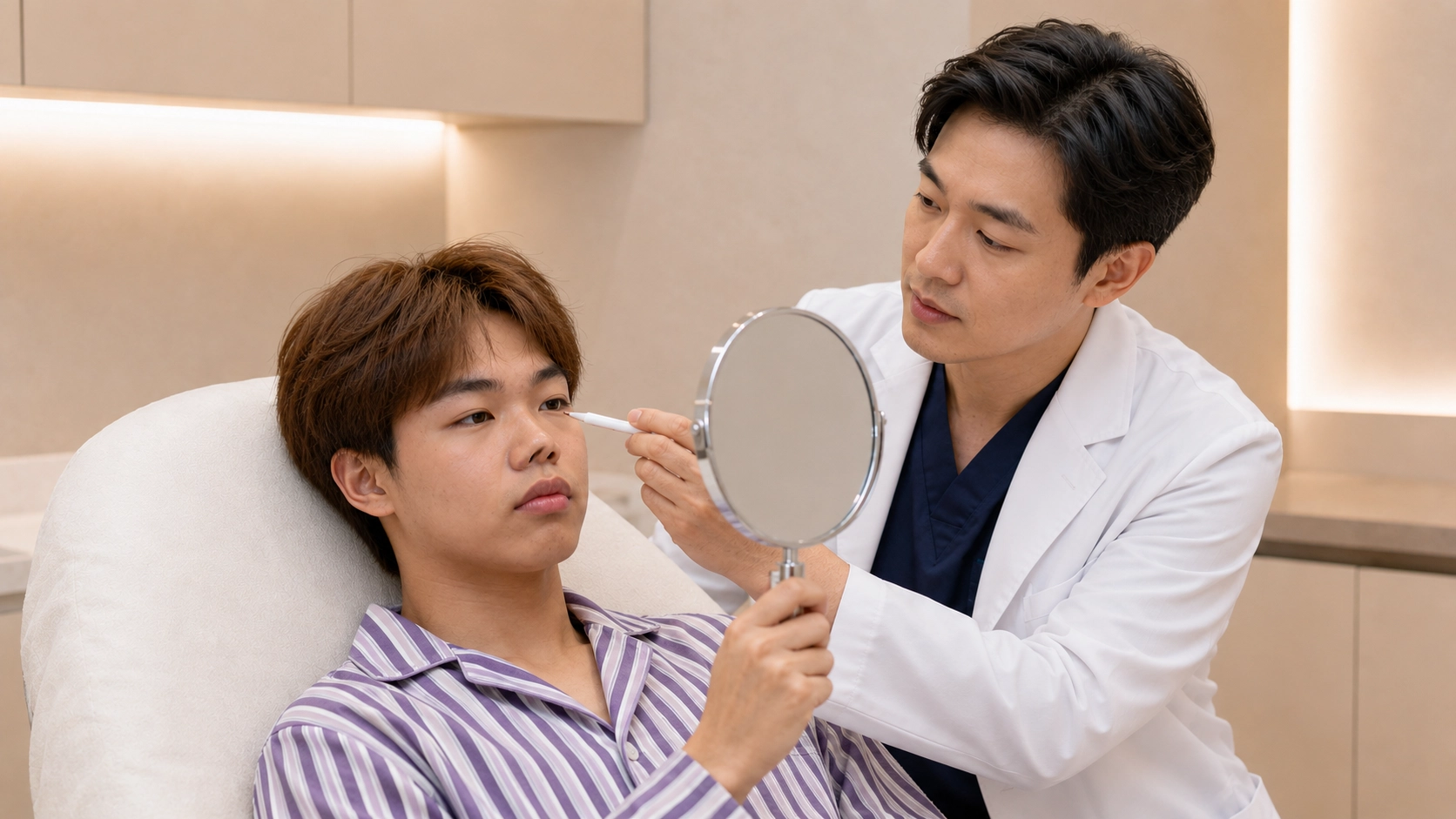
Revision Rhinoplasty
Also known as:
- Secondary Rhinoplasty
- Contracted Nose Correction
- Nose Implant Revision
Recovery
- Significant bruising typically lasts 14–21 days
- While the initial results are visible early on, the nose is a delicate structure
Considering Revision Rhinoplasty?
Compare transparent pricing from vetted specialists in minutes.
About Revision Rhinoplasty
Treated areas:
- Nose
REVISION RHINOPLASTY: Correct • Rebuild • Breathe
Expert Corrective Nasal Surgery | Restore Facial Harmony & Clear Breathing
Revision rhinoplasty is a specialized corrective surgery designed to fix or improve the results of a previous nose operation. Whether you are struggling with a shape that looks “over-done,” a crooked bridge, or functional breathing issues caused by structural collapse, this procedure rebuilds the nose for both beauty and health.
Note: This is one of the most complex plastic surgeries due to existing scar tissue. For the safest outcome, it is ideally performed 12–18 months after your first surgery to allow all swelling to fully resolve.
How It Works
✨ Scar Release: Carefully releasing old scar tissue to allow for precise reshaping.
✨ Structural Grafts: Rebuilding support using your own natural cartilage (Septum, Ear, or Rib).
✨ Airway Repair: Straightening the inner walls (septum) to resolve chronic blockages.
What You Will Achieve
✅ Natural Refinement: Reshapes the nasal tip and bridge to look soft, balanced, and perfectly matched to your facial features.
✅ Straight & Smooth Profile: Corrects a crooked bridge or uneven lines to create a symmetrical, elegant silhouette.
✅ Clear, Easy Breathing: Repairs internal structures and opens narrow airways, ensuring you can breathe comfortably through both sides.
✅ Structural Stability: Uses advanced grafting (from the septum, ear, or rib) to rebuild collapsed areas, ensuring your nose stays strong and stable.
✅ Symmetrical Nostrils: Fixes unevenness at the base of the nose for a balanced look from every angle.
✅ Restored Confidence: Eliminates the “pinched” or unnatural look, giving you a nose that looks like it belongs to you naturally.
Ideal Candidate
Suitable for adults aged 18 to 70+ who have had previous nasal surgery and are facing aesthetic or functional challenges.
You are the perfect candidate if you have:
- Visible Asymmetry: A nose that looks crooked, lopsided, or has uneven nostrils.
- Breathing Difficulties: A nose that feels blocked or collapses when you inhale.
- Structural Collapse: A “saddle nose” (sunken bridge) or a pinched, overly narrow tip.
- Unnatural Appearance: A bridge or tip that looks too upturned, bulky, or “operated.”
- Lingering Imperfections: Bumps or unevenness still visible on the bridge after healing.
- Internal Damage: Holes or weakness in the inner wall (septum) from the first surgery.
Price by Region
| Location | Ranging from |
|---|---|
| Korea | 4,500,000 (KRW) |
| Thailand | 100,000 (THB) |
| China | 20,000 (RMB) |
| Singapore | 12,000 (SGD) |
| Indonesia | 50,000,000 (IDR) |
Real Results
How It Is Performed
Detailed pre-operative 3-D CT scan and clinical analysis; review of previous surgical reports
- General anaesthesia
- Open columellar approach; meticulous skin envelope dissection to preserve vascular supply
- Complete removal of failed implant, capsular contracture tissue, and scar bands
- Costal cartilage harvest (6th–7th rib)
- Precision carving: dorsal onlay, septal extension graft, tip graft, lateral-crural strut
- Structural reconstruction maintaining skin envelope tension
- Alar-base correction; internal Doyle splints + external thermoplastic cast

























Your Timeline
Preparation
- Pre-operative CT scan
- ECG and full blood work
- Smoking cessation 4 weeks prior
- ENT consultation if airway is compromised
- Detailed scar and vascular assessment
Followup Care
External cast removed day 7; intranasal splint day 7–10
- Extended review schedule: 1, 3, 6, 12, and 24 months
- No eyeglass pressure on dorsum for 4 weeks
- No contact sports for 12 weeks
- Strict scar care and photo-protection for 12+ months
Frequently Asked Questions
How long must I wait after my primary rhinoplasty before revision?
At least 12 months, to allow complete healing and scar maturation. Urgent revision (for active infection or implant exposure causing skin compromise) is an exception and may be performed sooner on medical grounds.
Why is revision more expensive than primary rhinoplasty?
Revision involves longer operative time (scar tissue dissection, rib cartilage harvest and carving), greater technical complexity, higher complication risk management, and a more intensive follow-up schedule extending to 24 months.
Can a contracted "Avatar" nose be fixed?
Yes. By removing the contracted implant and rebuilding with costal cartilage and a septal extension graft, surgeons can restore projection and natural contour. Severe contracture cases may require two staged procedures.
· Next Step
Interested in Revision Rhinoplasty?
Connect with accredited specialists and get a personalised plan.