
How Long to Stay in Korea for Rhinoplasty? Day-by-Day Recovery & Flight Timeline
Exact 2026 travel timeline for rhinoplasty in Seoul: how many days to book before flight clearance, Day 1 to Day 10 recovery schedule, stitch removal, and airport immigration tips.
Key takeaways
- Primary Rhinoplasty Stay: Budget 7 to 10 nights in Seoul so you complete Day 6 to 7 cast and stitch removal plus final surgeon clearance before flying.
- Revision & Rib Cartilage Stay: Plan 10 to 14 nights when chest rib harvesting or nasal bone osteotomies are involved.
- Peak Swelling & Deswelling Curve: Facial puffiness peaks around Day 2 to 3, major bruising clears by Week 2, and thick tip skin settles steadily across 6 to 12 months.
- Flight Safety Habits: Pack sterile saline spray for dry cabin air, avoid lifting luggage over 5 kg for 14 days, and ask for an English surgery passport certificate.
- Never Fly Before Stitch Removal: Leaving early risks retained 6-0 nylon knots and voids your in-person healing checkup.
International patients undergoing primary rhinoplasty in South Korea should plan to stay in Seoul for 7 to 10 nights (8 to 11 total travel days including arrival consultation and pre-flight stitch clearance). If your surgical plan involves lateral nasal bone narrowing (osteotomy), revision rhinoplasty, or chest rib cartilage harvesting, extend your Gangnam hotel booking to 10 to 14 nights.
The critical bottleneck controlling your return flight date is external nasal cast removal, internal splint removal, and primary stitch clearance, which accredited Korean clinics schedule between Day 6 and Day 8 after surgery. Leaving Seoul before stitch removal complicates wound healing and prevents your surgeon from issuing a signed fit-to-fly medical certificate.
Minimum Seoul Stay Duration by Rhinoplasty Type
Not every nose procedure shares the same recovery curve. Minor nostril trimming or non-surgical bridge treatments let you board a flight within days, whereas bone fracture osteotomies and autologous rib harvests demand closer clinical monitoring before cabin air-pressure changes.
| Procedure Scope | Recommended Seoul Nights | Internal Packing Out | Cast / Splint & Stitches Out | Safe Long-Haul Flight Window |
|---|---|---|---|---|
| Alarplasty (Nostril Reduction Only) | 6 to 7 nights | None required | Day 5 to Day 7 | Day 6 to Day 7 onward |
| Primary Silicone + Ear / Septal Tip Rhinoplasty | 7 to 10 nights | Day 1 to Day 2 | Day 6 to Day 7 | Day 8 to Day 10 onward |
| Osteotomy (Bone Narrowing) / Dorsal Hump Removal | 9 to 12 nights | Day 2 | Day 7 to Day 8 | Day 9 to Day 11 onward |
| Autologous Rib Cartilage / Complex Revision Rhinoplasty | 10 to 14 nights | Day 2 to Day 3 | Day 7 to Day 10 (chest stitch Day 10) | Day 10 to Day 14 onward |
| Liquid Nose Filler / Hiko Threads | 1 to 3 nights | None | None (dissolvable entry) | 24 to 48 hours after vascular check |
Day-by-Day Recovery Schedule in Seoul (Arrival Through Stitch Removal)
Sequencing consultations, surgery, LED deswelling care, and stitch removal cleanly prevents frantic hotel extensions. Below is the standard itinerary used at accredited Gangnam centers like GNG Hospital, Dream Plastic Surgery, View Plastic Surgery, and Lienjang Hospital:
- Day -1 to Day 0 (Arrival & In-Person Consults): Check into your Sinsa or Apgujeong hotel, attend 2 to 3 shortlisted consultations, complete 3D CT imaging and pre-op blood panels, and sign your consent form after reviewing VAT-inclusive 2026 surgical pricing.
- Day 1 (Surgery Day): Fast 6 to 8 hours prior to sedation or general anesthesia. Operations last 1.5 to 4 hours. You recover in the clinic observation lounge for 2 to 4 hours before returning to your hotel via taxi (rare rib cases stay 1 night inpatient).
- Day 2 (Internal Packing Removal & First Walk): Return to the clinic to remove soft cotton nasal packing so you can breathe gently through your nostrils again. Take short 15-minute walks around your hotel to stimulate lymphatic drainage.
- Day 3 to Day 4 (Peak Swelling Window): Facial puffiness, upper-lip stiffness, and mild under-eye bruising peak around 48 to 72 hours. Most Seoul clinics invite you back for complimentary LED red-light deswelling therapy and medical hair shampooing.
- Day 5 to Day 6 (Bruising Fades Yellow): Under-eye purple bruising begins shifting pale yellow and drops downward toward the cheeks. Keep your head elevated 30 to 45 degrees every night.
- Day 7 to Day 8 (The Big Milestone: Cast & Stitches Off): Your surgeon removes the rigid thermoplastic dorsal cast, inner septal splints, and tiny columella stitches (ear or chest sutures may finish Day 8 to 10). Your clinic cleans crusting gently and evaluates surgical symmetry.
- Day 9 to Day 10 (Final Physician Clearance & Flight Home): Attend a final scar-care and airway checkup, collect extra ointment plus your English Plastic Surgery Confirmation Certificate, and fly home comfortably.
Week-by-Week Activity Milestones: Showering, Makeup, Alcohol & Gym Return
Knowing exact healing cutoffs helps prevent delayed wound opening, prolonged tip inflammation, or broken grafts after returning home:
- Showering & face washing (Day 2 onward): Body showers are allowed from Day 2 onward as long as the external dorsal cast stays completely dry. Clean forehead and cheeks carefully with lukewarm micellar water wipes; wait 24 hours after Day 7 stitch removal before wetting the incision line directly.
- Makeup & skincare (Day 8 to Day 10): Avoid applying liquid foundation or concealer near fresh columella or alar sutures during Week 1. Mineral concealer around dark cheek bruising is safe after stitches come out cleanly.
- Alcohol, nicotine & saunas (Wait minimum 4 weeks): Alcohol dilates blood vessels and increases late mucosal bleeding, while nicotine constricts microscopic dermal capillaries feeding the nasal tip. Skip Korean jjimjilbang saunas, hot yoga, and steam rooms for at least 30 days.
- Cardio exercise & contact sports (Weeks 3 to 8): Light neighborhood walking helps deswelling immediately from Day 2. Wait 3 to 4 weeks before lifting weights or running, and 6 to 8 weeks before basketball, boxing, or swimming goggles.
Can You Fly After Rhinoplasty? Cabin Pressure & Airport Tips
Most Korean plastic surgeons clear straightforward primary rhinoplasty patients to fly home between Day 7 and Day 10, and osteotomy or rib-graft patients between Day 10 and Day 14. Commercial aircraft cabins press to roughly 6,000 to 8,000 feet altitude, creating two manageable travel effects:
- Temporary swelling rebound & ear fullness: Lower cabin air pressure and dry recirculated cabin air cause mild fluid retention and ear popping during descent. Pre-hydrate well, chew sugar-free gum on descent, and carry preservative-free isotonic saline nasal spray in your clear TSA liquids bag to keep mucosal grafts moist.
- No heavy overhead-bin lifting for 14 days: Lifting a 15 to 20 kg carry-on spikes venous facial blood pressure and risks acute post-operative nosebleeds. Pay for checked luggage, book aisle seats near restrooms, and request airport wheelchair or bag-porter assistance through Incheon Airport if traveling solo.
- Request an English Plastic Surgery Passport Certificate: Because severe upper-face swelling or nasal taping at Day 7 to 10 can occasionally trigger automated facial-recognition gate rejections at Incheon Airport immigration, verified Seoul clinics routinely print a stamped English medical certificate with your photo ID and surgical date.
Planning consultations and hotel logistics in one trip? Contact BeautsGO’s English coordination team to map surgery dates cleanly around Incheon flight schedules across vetted Seoul hospitals.
Long-Term Deswelling Timeline: Week 2 to Month 12 (Thin vs. Thick Skin)
Seeing your nose on Day 7 when the cast comes off surprises many first-time patients: the tip looks noticeably swollen, slightly upturned, and broader than the final result. Knowing normal tissue biology stops unnecessary panic during Month 1 to Month 3.
| Healing Stage | What You Actually See in the Mirror | Thick / Sebaceous Skin Differences | Daily Care Priorities |
|---|---|---|---|
| Week 1 (Cast On) | Significant mid-face & under-eye puffiness; mouth breathing Days 1 to 2 | Slight forehead oiliness under tape | Cold compresses around cheeks Days 1 to 3; keep cast 100% dry |
| Weeks 2 to 4 | Approx. 65% to 75% of major bruising and facial swelling resolves; socially ready | Nasal tip stays firmer and rounder | Switch to warm compresses around cheeks only; begin gentle walking |
| Months 1 to 3 | Bridge slims sharply; tip softness gradually returns and slight over-rotation relaxes | Sebaceous pores retain fluid longer | Night taping if prescribed; avoid direct sunburn on columella scar |
| Months 6 to 12+ | Final tip contour, natural nostril flare, and refined dorsal highlight lock in | Bulbous thick skin finishes settling around Months 9 to 15 | Confirm minimum 6 to 12 month window before evaluating any surgical refinement |
Practical Gangnam Recovery Checklist: Sleeping, Glasses, Showers & Food
Small daily habits inside your Gangnam hotel protect delicate tip cartilage stitches while keeping swelling low:
- Sleep elevated at 30 to 45 degrees for 14 days: Pack a U-shaped airplane neck pillow or stack two hotel pillows under your shoulders. Never sleep flat or on your side where accidental pillow pressure can shift a fresh dorsal implant or bone osteotomy.
- Zero heavy glasses on the nasal bridge for 4 to 6 weeks: Switch to daily contact lenses once eye swelling settles (around Day 4 to 5), or tape lightweight glasses onto your forehead using cheek-rest supports.
- Do not blow your nose for 3 to 4 weeks: Forceful nose blowing introduces bacteria and pressure into healing septal incisions. Sniff gently backward or blot softly with sterile cotton swabs dipped in saline, and sneeze with your mouth wide open.
- Best recovery zone in Seoul: Choose hotels within 10 minutes walking or taxi distance of Sinsa, Sinnonhyeon, Apgujeong, or Nonhyeon stations (near Classy Plastic Surgery and Cheongdam FIRST Plastic Surgery) so follow-up visits take minutes.
- Soft, low-sodium recovery meals: High-sodium Korean stews intensify fluid swelling during Week 1. Stock up on warm pumpkin porridge (hobak-juk), soft tofu soup without excessive chili, smoothies, and plenty of water at nearby convenience stores.
What to Pack in Your Seoul Rhinoplasty Recovery Bag
Experienced medical travelers pack five lightweight essentials before leaving home so recovery days in Seoul stay comfortable:
- Three to four wide button-up shirts or zip hoodies so zero tight necklines pull across your nose bandaging when dressing.
- Preservative-free isotonic saline mist spray, petroleum lip balm for Week 1 mouth breathing, and soothing herbal throat lozenges.
- A firm inflatable U-shaped airplane neck pillow paired with extra hotel bed bolsters to keep your upper torso propped upright cleanly.
- Silicone straws, wet facial cleansing wipes, and dry shampoo between complementary clinic scalp washes.
- Wide-brim breathable baseball cap plus disposable surgical masks for discreet Gangnam walks after Day 3.
Why You Should Not Rush Back Home Before Stitch Removal
Occasionally budget travelers try flying out at Day 4 or Day 5 intending to have a local walk-in nurse remove internal sutures at home. Experienced Seoul specialists including Dr. Seong Yong Hae, Dr. Tony Yang Soo Park, Dr. Choi Soon Woo, and Dr. Chang Young Woo strongly advise against early departure.
Unfamiliar general clinics at home lack surgical maps of where microscopic 6-0 nylon columella knots or deep mucosal septal stitches sit. Missed suture fragments trigger chronic granuloma bumps, while early removal without checking splint symmetry sacrifices your free surgical safety checkup in Seoul.
Traveling Solo to Seoul for Surgery? Practical Hotel & Airport Tips
Thousands of international patients fly to Gangnam solo every year with smooth recoveries. Booking an elevator-equipped serviced residence or 4-star hotel within 500 meters of your hospital removes tiring transit while heavily congested on Day 1 and Day 2. Arrange convenience delivery apps or hotel room service for soft meals during the first 48 hours, and reserve an airport limousine bus or private hospital transfer for departure day so you never haul heavy suitcases up subway stairs.
Ear & Chest Donor Site Care After Returning Home
Do not neglect cartilage harvest sites once your nasal cast comes off cleanly. If your surgeon took ear conchal cartilage, sleep on your opposite side for 3 weeks and apply gentle antibiotic ointment along the back-of-ear crease until dry. For autologous rib patients, avoid overhead stretching, heavy backpacks, and chest twisting exercises for 4 weeks, switching to medical-grade silicone scar gel or sheets along the subtle inframammary crease once every scab separates naturally.
When to Contact Your Seoul Clinic Immediately During Recovery
Mild pinkish oozing during the first 48 hours and minor unilateral nostril congestion across Week 1 are completely normal. However, contact your hospital coordinator immediately if you experience any warning signs below:
- Sudden severe asymmetric throbbing or tight pale skin blanching over the nasal tip.
- Bright red arterial nosebleeds soaking gauze continuously past 20 minutes despite upright posture.
- Purulent yellow-green discharge, spreading redness, or fever exceeding 38.0°C (100.4°F) after Day 3.
- Accidental direct impact or trauma to the nasal splint.
Plan Your Seoul Rhinoplasty Dates & Hotel Window Smoothly
Giving yourself a clean 8 to 10 night buffer for primary rhinoplasty (or 10 to 14 nights for osteotomy, bulbous, or rib cartilage cases) removes recovery stress and lets you return home once bandages are off. Compare verified rhinoplasty surgeons and hospital protocols or message BeautsGO directly for free help scheduling consultations around your travel window.
Medical Disclaimer: Stay lengths and flight clearance depend strictly on individual surgical complexity, bleeding control, and healing progress certified by your operating surgeon.
Frequently asked questions
How many days should I stay in South Korea for rhinoplasty?
When can I safely fly home after a nose job in Korea?
What day are nose casts and stitches removed at Seoul clinics?
Do I need a medical certificate for airport immigration after plastic surgery in Korea?
When can I wear glasses or exercise after rhinoplasty?
Why does my nose tip still look swollen after 1 month?
Mentioned in this guide
12 items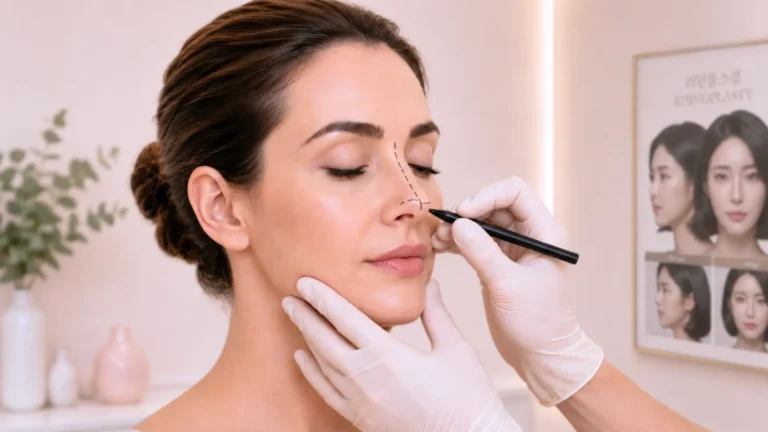 Procedure
Rhinoplasty
Reshapes size, bridge & tip. Straightens crooked nose. Removes bumps/humps. Narrows wide nose/nostrils. Balances facial proportions. Improves breathing & airflow. Corrects structural issues. Natural, permanent results.
View procedure
 Procedure
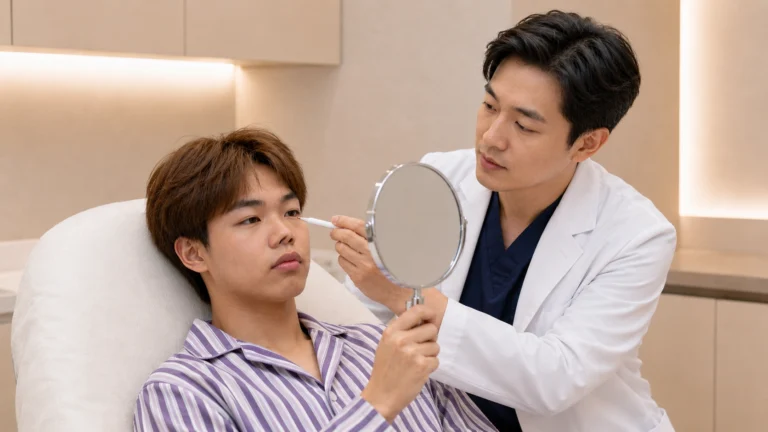
Revision Rhinoplasty
Fixes aesthetic errors like pinched tips or crooked bridges. Restores clear breathing and corrects nasal valve collapse. Rebuilds structural support using advanced cartilage grafting. Corrects asymmetries in the nostrils and nasal tip. Smooths out post-surgical bumps and skin indentations. Adjusts nose length and rotation for better facial balance. Manages scar tissue to create a more natural appearance. Restores self-esteem after a disappointing first procedure.
View procedure
 Doctor · Korea
Dr. Seong Yong Hae
Director / Head Surgeon · 17+ years · GNG Hospital
View doctor
 Doctor · Korea
Dr. Tony Yang Soo Park
Professor / Founder & Chief Surgeon · 25+ years · Dream Plastic Surgery
View doctor
 Doctor · Korea
Dr. Choi Soon Woo
CEO / Founder & Chief Plastic Surgeon · 25+ years · View Plastic Surgery
View doctor
 Doctor · Korea
Dr. Chang Young Woo
Director / Head Plastic Surgeon · 17+ years · Lienjang Hospital
View doctor
 Hospital · Seoul
GNG Hospital
Plastic Surgery Aesthetic · BeautsGO verified
View hospital
 Hospital · Seoul
Dream Plastic Surgery
Plastic Surgery Aesthetic · BeautsGO verified
View hospital
 Hospital · Seoul
View Plastic Surgery
Plastic Surgery Aesthetic · BeautsGO verified
View hospital
 Hospital · Seoul
Lienjang Hospital
Plastic Surgery Aesthetic · BeautsGO verified
View hospital
 Hospital · Seoul
Classy Plastic Surgery
Plastic Surgery Aesthetic · BeautsGO verified
View hospital
 Hospital · Seoul
Cheongdam FIRST Plastic Surgery
Plastic Surgery Aesthetic · BeautsGO verified
View hospital
More from the Journal
All articlesMedical disclaimer: This content is for informational purposes only and is not a substitute for professional medical advice, diagnosis, or treatment. Read our full Medical Disclaimer.