Rhinoplasty in Turkey: Cost, Surgeons, Recovery and How Long to Stay

Key takeaways
- Turkey is a high-volume rhinoplasty destination. Nine in ten Turkish plastic surgeons who answered the ISAPS survey perform rhinoplasty, and on average almost a third of their patients come from abroad.
- Stay at least 7 to 10 days. UK NHS advice is to wait 7 to 10 days before flying after facial cosmetic surgery. Allow closer to two weeks if your flight home is long-haul.
- Compare what is included, not just the price. A complete quote names your surgeon and covers anaesthesia, the hospital stay, medication, the splint and follow-up, and says who pays if you need further surgery.
- Check the surgeon before you pay. UK and Turkish plastic surgery societies published a joint checklist in 2023: specialist membership, board certification, at least five years in practice and a signed consent form before you travel.
- Judge the result at around a year. Swelling can take 6 to 12 months to settle, so the nose you fly home with is not the final result.
- Coordination is free. Send your photos, get an itemised quote from the clinic, and pay the clinic directly.
Choosing where to have a nose job is rarely just about the price on a clinic’s website. Two quotes that look similar can describe very different things, and the length of your stay and the surgeon you pick can matter as much as the fee.
This guide draws on ISAPS survey data, NHS and ASPS patient guidance, the joint BAAPS and TSPRAS checklist for patients, and recent published reviews. It walks through how to read a quote, which techniques you will hear about, how to vet a surgeon, what recovery looks like week by week and when it is safe to fly. It also explains how Turkey compares with South Korea, so you can decide which suits your nose and your goal.
Why Choose Turkey for Rhinoplasty?
Turkey’s Surgical Volume
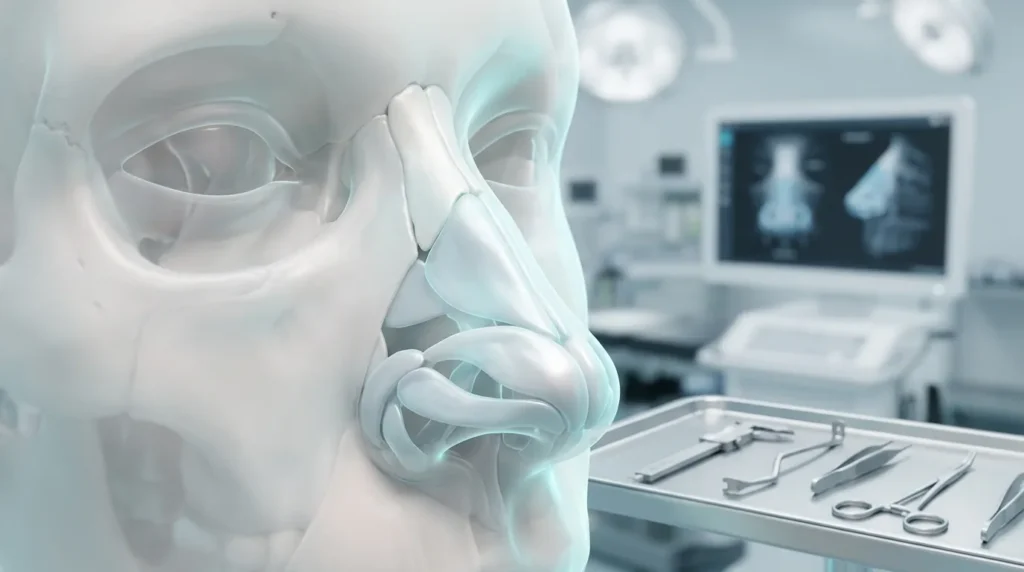
Rhinoplasty is one of the core procedures of Turkish plastic surgery. ISAPS country data show Turkish surgeons performed an estimated 76,190 rhinoplasties in 2025, the second most common surgical procedure in the country after eyelid surgery. Only Brazil (87,060) and China (80,500) reported more, with South Korea close behind at 74,974. In the same survey, 89.9% of responding Turkish plastic surgeons said they perform rhinoplasty, and Turkish surgeons reported that on average 32.4% of their patients travel from abroad, mainly from Germany, the UK and the US.
A Teaching Centre for Preservation Rhinoplasty
Istanbul is also a teaching centre for one of the most discussed approaches in modern nose surgery. Turkish surgeons have published widely on preservation rhinoplasty and taught it at official ISAPS events, including the ISAPS Rhinoplasty Course in Istanbul in 2019 and a preservation rhinoplasty masterclass at the ISAPS World Congress in Istanbul in 2022.
Health Tourism Rules That Protect Patients
Turkey’s health tourism rules add some protection for international patients. Since the end of 2025, hospitals and clinics that care for health tourists must hold complication insurance for surgical procedures, and they must give you an itemised invoice with unit prices. Every authorised facility must also be listed on HealthTürkiye, the government’s health tourism portal, where you can check a clinic yourself.
How Much Does Rhinoplasty in Turkey Cost?
Rhinoplasty prices in Turkey vary widely, and headline prices online rarely describe the same thing. One quote may cover only the surgeon’s fee; another may include anaesthesia, a night in hospital, medication and follow-up visits.
Reference Prices in the UK and US
For reference, the UK NHS puts the cost of private nose reshaping in the UK at £4,000 to £7,000. In the US, the American Society of Plastic Surgeons reports an average surgeon’s fee of $7,637, and that figure excludes anaesthesia, the operating room and other costs.
| Location | What the Figure Covers | Estimated Cost* |
|---|---|---|
| UK (private) | Private nose reshaping, per NHS guidance | £4,000 to £7,000 |
| US | Average surgeon’s fee only, per ASPS (excludes anaesthesia, operating room and other costs) | $7,637 |
| Turkey | Varies by surgeon, technique and what the quote includes | Confirm with an itemised quote |
*Important Pricing Note (Terms and Conditions Apply): The figures above are general market and planning estimates only, not fixed hospital or clinic quotations. Terms and conditions apply. The final price can only be confirmed after an in-person consultation and examination at the hospital or clinic, and may be higher or lower depending on your individual complexity.
What a Good Quote Should Answer
When you compare quotes from Turkey, check that each one answers these points:
- Who operates. The quote should name the surgeon who will perform your operation, not just the clinic.
- What the fee covers. Surgeon’s fee, anaesthesia, the operating room and hospital stay, medical tests, medication, the splint and dressings.
- Follow-up. At least one check by your operating surgeon before you fly, and how follow-up works once you are home, for example by video.
- Complications and revision. Who pays if you need further surgery, and what the clinic’s revision policy is.
- Changing your mind. Deposit and refund terms if you cancel after paying.
- A named contact. A named doctor to contact if something goes wrong, not only a helpline.
One more point is easy to miss: ordinary travel insurance usually does not cover problems arising from planned surgery abroad, so ask what cover is available.
BeautsGO Beauty coordinates rhinoplasty enquiries free of charge, and you pay the clinic directly. Send us your photos and goals, and your coordinator will put these questions to our Istanbul partner clinic, Vanity Plastic Surgery, and request an itemised quote.
Rhinoplasty Techniques You Will Hear About

Open and Closed Rhinoplasty
In closed rhinoplasty the cuts are made inside the nostrils, leaving no visible scar. In open rhinoplasty the surgeon also makes a small cut across the strip of skin between the nostrils, which gives a direct view of the structures underneath. A 2025 meta-analysis of more than 1,000 patients found no significant difference between the two in satisfaction, swelling, bruising or complications. The right approach depends on what needs to change, so let the surgeon explain their choice. Our rhinoplasty procedure guide explains what a full rhinoplasty involves.
Preservation Rhinoplasty
Instead of removing a hump and rebuilding the bridge, the surgeon lowers or reshapes the bridge while keeping its natural structure. The idea dates back to the early 1900s, but the term was introduced in 2018 and the approach has grown rapidly since. A 2026 meta-analysis found outcomes comparable to traditional hump reduction, with fewer late complications, while noting that traditional techniques remain appropriate for larger changes.
Ultrasonic (Piezo) Rhinoplasty
An ultrasonic device reshapes bone with fine vibrations instead of a chisel. Meta-analyses of randomised trials report less swelling, bruising and pain in the first week. One review rates the evidence as low quality, and long-term data are lacking, so treat it as a tool, not a guarantee of a better result.
Septorhinoplasty
If a deviated septum affects your breathing, it can often be corrected in the same operation as cosmetic changes. Tell your surgeon about any breathing problems at your consultation.
Revision Rhinoplasty
A second operation to correct an earlier result is more complex than a first rhinoplasty. If you have had nose surgery before, read our guide to revision rhinoplasty and share your previous operation notes with the surgeon.
How to Choose a Rhinoplasty Surgeon in Turkey
In 2023 the British Association of Aesthetic Plastic Surgeons (BAAPS) and the Turkish Society of Plastic, Reconstructive and Aesthetic Surgeons (TSPRAS) published a joint checklist for anyone considering surgery in Turkey. In summary, check that your surgeon:
- is a member of TSPRAS, which you can confirm on the society’s online member search;
- holds Turkish board certification in plastic surgery, with European board certification (EBOPRAS) a further plus;
- has at least five years of experience as a plastic surgeon and has worked with the clinic for at least three years;
- operates in a fully recognised hospital, and gives you an aftercare plan with their name and contact details;
- completes a full consent form with you before you travel.
Also check that the clinic appears on the HealthTürkiye list of authorised providers. UK guidance adds two habits worth keeping: have two consultations with the operating surgeon, ideally about two weeks apart, and do not pay for a hospital you have never seen or a surgeon you have not met. As a BAAPS and BAPRAS patient leaflet puts it, “nobody needs urgent rhinoplasty”.
Recovery Timeline and How Long to Stay in Turkey
Week-by-Week Recovery
Most people go home with a nose that still looks swollen. That is normal. The table below summarises the typical recovery from NHS and ASPS patient guidance; your surgeon will give you a personal plan.
| Time after surgery | What to expect |
|---|---|
| Day of surgery | The operation takes about 1.5 to 3 hours under general anaesthetic. You will usually wake with a splint on your nose. |
| Days 1 to 7 | Swelling and bruising around the eyes peak and start to fade. Rest and follow your surgeon’s aftercare instructions. |
| Day 7 to 10 | The splint and any external stitches are usually removed. This is the earliest point to plan your flight home. |
| Weeks 2 to 3 | Most bruising has gone. Many people return to desk work within two weeks. |
| Weeks 4 to 6 | Strenuous exercise can usually restart. Avoid contact sports for longer, as your surgeon advises. |
| Months 6 to 12 | Remaining swelling settles. The NHS says swelling can take up to 6 months to go; ASPS says the final contour can take up to a year. |
How Long to Stay in Turkey
The NHS advises waiting 7 to 10 days before flying after facial cosmetic surgery. BAAPS guidelines for surgery abroad go further for journeys of about four hours or more: for operations under general anaesthetic of up to three hours, they suggest arriving at least 72 hours before surgery and staying one to two weeks afterwards. Our reading for rhinoplasty is to arrive at least three days early, so you can meet your surgeon in person at least 48 hours before the operation, and to stay at least 7 to 10 days after it. If you are flying long-haul, for example to Kuala Lumpur or Singapore, plan for closer to two weeks. Either way, make sure your operating surgeon has checked you before you leave.
Flying Home After a Nose Job
You can fly once your surgeon has removed the splint and confirmed you are fit to travel, usually after 7 to 10 days. On the flight, choose an aisle seat, drink plenty of water and walk around regularly.
Keep the Trip About Your Nose
It can be tempting to add another operation while you are there. A study of almost 5,000 rhinoplasty patients found the rate of major complications rose from 0.58% for rhinoplasty alone to 1.02% when one other body area was operated on at the same time, and 2.09% with two. Do your sightseeing before surgery and keep recovery days quiet.
Risks and Revision: What the Numbers Say
Surgical Risks
Like any operation, rhinoplasty carries risks. The NHS lists breathing difficulty, damage to the septum, a changed sense of smell and heavy nosebleeds, alongside the general risks of surgery such as bleeding, infection and blood clots. Serious complications are uncommon: in the study above, 0.7% of patients needed emergency care, a hospital admission or another operation within 30 days.
Revision Rates
The more common disappointment is a result that does not look as hoped once the swelling settles. A study that followed 175,842 patients for at least three years found that 3.3% had a revision, rising to 7.9% when the first operation was done for cosmetic reasons and 11% when the operation was itself a revision. Specialist reviews often quote revision rates of 5% to 15%. Surgeons generally wait until the nose has settled, often around a year, before judging the result or planning revision.
Reducing Your Risk
UK audits of complications after surgery abroad are dominated by tummy tucks and breast operations, and rhinoplasty is not singled out in the figures we found. The best protection is the same everywhere: a well-qualified surgeon, a realistic plan and enough time in Turkey to recover. For more on why the lowest price can cost more, see the hidden cost of cheap rhinoplasty.
Rhinoplasty in Turkey or Korea?
Turkey and South Korea perform almost the same number of rhinoplasties (76,190 and 74,974 in 2025, according to ISAPS), and BeautsGO Beauty works with clinics in both. The better choice depends less on the country than on your nose and your goal.
If You Want to Reduce or Refine
A dorsal hump, a wide or drooping tip, or a deviated septum are the changes surgeons most often make on Middle Eastern noses. A 2026 series of 100 Middle Eastern patients found a dorsal hump in 91% and septal deviation in 85%. Turkish surgeons’ foreign patients come most often from Germany, the UK and the US.
If You Want to Build Up
For a low bridge or a less defined tip, the operation is usually an augmentation rhinoplasty, which adds height using your own cartilage or an implant. Clinical reviews describe augmentation as the most common rhinoplasty in Asian patients, with silicone and other implants widely used in the region alongside rib and ear cartilage grafts. Korean surgeons have published widely on augmentation for East Asian noses, using implants or the patient’s own cartilage, and their foreign patients come most often from China, Japan and the US. Each material has trade-offs: a review of 3,803 implant cases found a pooled revision rate of 6.4%. See our Korea destination guide for clinics there. Our guide to silicone vs cartilage rhinoplasty explains the choice.
If you are unsure which suits you, send us your photos and goals, and we will tell you which partner clinic is the better fit for your nose.
How BeautsGO Beauty Helps
BeautsGO Beauty coordinates rhinoplasty enquiries in Istanbul with Vanity Plastic Surgery, free of charge. To start, prepare:
- Clear, recent front and side photos of your nose, in good light and without filters.
- Details of any previous nose surgery or fillers, with approximate dates.
- Any breathing problems or medical conditions.
- Your preferred dates.
Your coordinator shares this with the clinic, arranges your consultation, and helps you compare the quote and plan the right length of stay. You pay the clinic directly; BeautsGO does not add a fee or collect payment for surgery. BeautsGO does not book hotels, airport transfers or interpreters in Turkey; if you would like help finding options, ask your coordinator. For travel, visas and other procedures, see our Turkey destination guide.
Frequently asked questions
How much does rhinoplasty cost in Turkey?
How long do I need to stay in Turkey after rhinoplasty?
Can you fly after a nose job?
Is rhinoplasty in Turkey safe?
Is it better to get a nose job in the UK or Turkey?
Which country is best for a nose job?
More from the Journal
All articles
Medical disclaimer: This content is for informational purposes only and is not a substitute for professional medical advice, diagnosis, or treatment. Read our full Medical Disclaimer.