
Why Your Compression Garment Dictates 50% of Your Final Liposuction Results
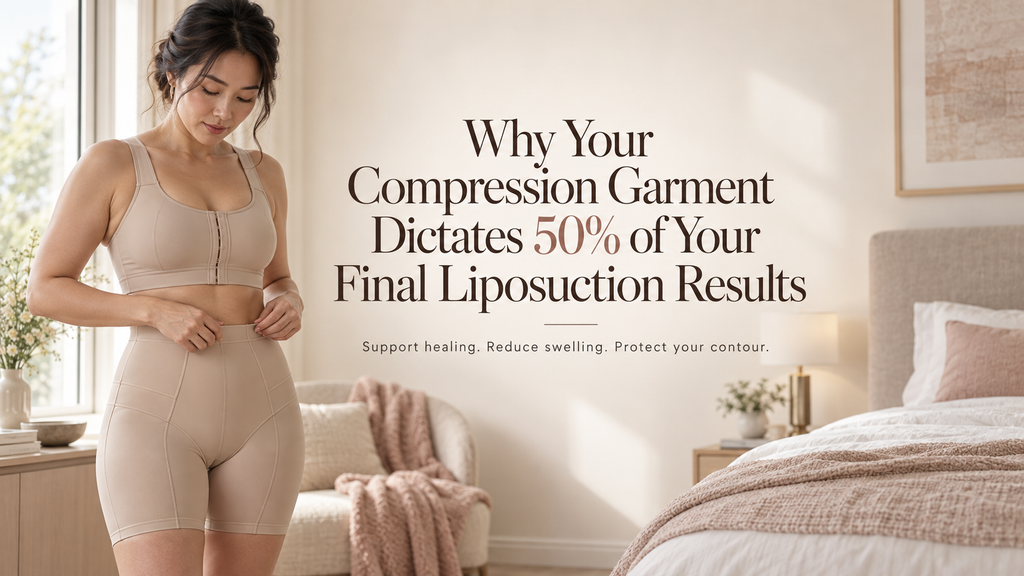
Nobody gets excited about a compression garment.
People get excited about a flatter stomach.
A more defined waistline.
A better-fitting dress.
The confidence they’ve been imagining for months.
The compression garment?
That’s the annoying part nobody talks about until after liposuction.
Then suddenly it becomes the center of your life.
You sleep in it.
Walk in it.
Watch Netflix in it.
Complain about it.
Google questions about it at 2 a.m.
And eventually ask yourself:
“Do I really have to keep wearing this thing?”
If you’ve never had liposuction before, welcome to one of the most common recovery experiences.
Let’s walk through the stages almost every liposuction client goes through.
Stage 1: “How Important Can It Really Be?”
This thought usually appears within the first few days.
After all, the surgeon performed the procedure.
The fat has already been removed.
The hard part should be over.
Right?
Not quite.
Liposuction changes what’s underneath the skin.
Your body then needs time to adapt.
Swelling develops.
Tissues heal.
Skin gradually settles over the newly contoured area.
The compression garment is designed to support this process.
In other words:
The surgery creates the change.
The recovery helps reveal it.
Stage 2: “This Is Much Less Comfortable Than I Expected”
Nobody warns you how much attention you’ll give a piece of clothing.
Suddenly you’re aware of it all day.
It’s snug.
It’s warm.
Sometimes it feels restrictive.
You start counting the hours until you’re allowed to remove it briefly.
This is usually the point where people start searching online:
- How long do I really need to wear it?
- Can I sleep without it?
- What happens if I skip one day?
- Did anyone else stop early?
And that’s completely normal.
Because you’re not just recovering from liposuction.
You’re adapting to a temporary lifestyle change.
Stage 3: “Maybe I’ll Just Take It Off for a Little While”
This is where negotiations begin.
Not with your surgeon.
With yourself.
Maybe just during dinner.
Maybe while working from home.
Maybe for an afternoon.
After all, you feel okay.
Nothing dramatic happens when you remove it.
That’s what makes this stage tricky.
Recovery rarely provides instant consequences.
Your body doesn’t send a warning notification saying:
“Compression support required immediately.”
Healing is happening quietly in the background.
Which is why many specialists encourage clients to follow compression instructions even when they feel perfectly fine.
Stage 4: “Why Are Surgeons So Obsessed With These Things?”
It’s a fair question.
Why does every liposuction recovery guide seem to mention compression garments?
Because they’re doing several jobs at once.
They help support healing tissues.
They help manage swelling.
They help reduce the chance of fluid collecting beneath the skin.
They help provide support while your body adjusts to its new contour.
Think of them less as clothing and more as part of your recovery toolkit.
Stage 5: “I Actually Feel Strange Without It”
Something unexpected often happens.
The same garment you complained about for weeks suddenly feels helpful.
Many clients notice they feel more supported while wearing it.
The treated area may feel less heavy or less sensitive.
It’s a surprising moment.
The thing you wanted to throw across the room a week ago has become part of your routine.
Stage 6: “What Happens If I Stop Wearing It Too Early?”
This is usually the question behind every other question.
People don’t really want to know what compression garments do.
They want to know whether they can stop using them.
The answer depends on your procedure, recovery progress, and your surgeon’s recommendations.
However, stopping earlier than advised may mean:
- Swelling takes longer to settle
- Healing becomes less predictable
- Fluid accumulation becomes more likely
- It may take longer to appreciate your final contour
That’s why specialists generally view compression garments as part of recovery rather than an optional extra.
Stage 7: “Now I Understand Why Everyone Kept Talking About It”
This stage usually arrives months later.
The swelling has largely settled.
Your shape becomes more visible.
Your recovery feels like a distant memory.
And suddenly the compression garment that dominated your life for weeks is gone.
Looking back, many clients realize something important.
The procedure itself was only one chapter.
Recovery was another.
And the compression garment played a role in that journey.
Not because it was glamorous.
Not because it was comfortable.
But because healing doesn’t stop when surgery ends.
So, Is a Compression Garment Really Necessary?
If you’re hoping for a simple yes-or-no answer, recovery rarely works that way.
Every liposuction journey is different.
Every treatment area is different.
Every surgeon has their own protocols.
But there is a reason compression garments are routinely recommended around the world after liposuction.
They’re designed to support your body during one of the most important phases of the process, the weeks after the fat has already been removed.
The reality is that most people don’t remember the discomfort forever.
They remember the outcome.
And that’s exactly why specialists place so much importance on recovery instructions in the first place.
Thinking About Liposuction Abroad?
Many people spend months comparing liposuction techniques, clinics, and destinations.
Far fewer spend time understanding what happens after the procedure.
Before making any decisions, it’s worth discussing:
- Recovery timelines
- Compression garment requirements
- Travel plans after treatment
- Follow-up arrangements
- Support available once you return home
Understanding recovery before treatment often leads to a smoother and less stressful experience overall.