
What Type of Acne Scars Do I Have? How to Tell
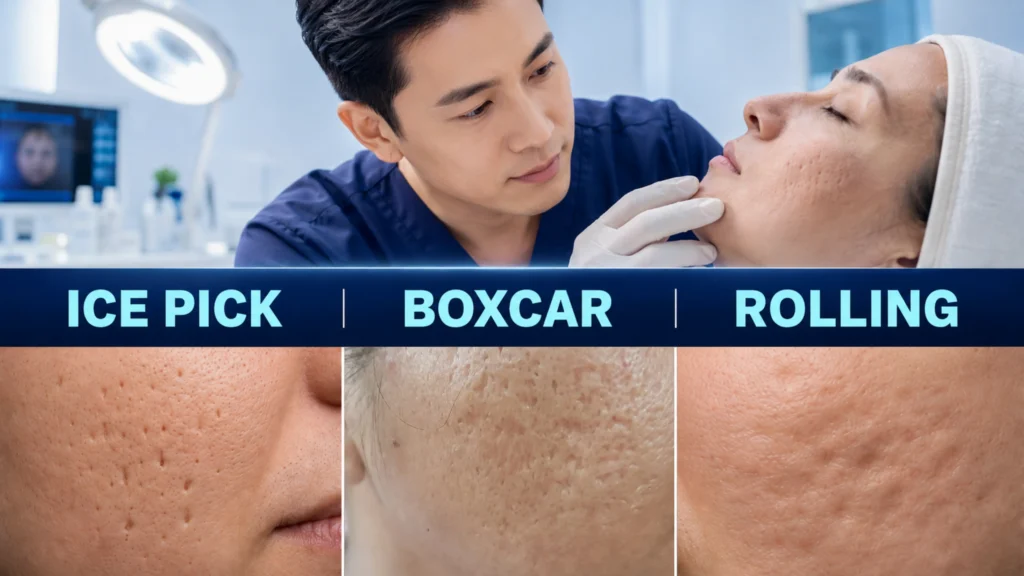
Most indented acne scars fall into three shapes: narrow and deep (ice pick), sharp-edged like a small crater (boxcar), and broad with soft, sloping edges (rolling). The fastest way to tell which you have is to look at your skin under side lighting rather than straight-on, then gently stretch the skin and see which dips shallow out. Most people have a mix of more than one type, which is normal.
This guide is about indented scars, the ones you can feel as a change in texture. If what you’re looking at is flat and only a difference in color, that’s a mark rather than a scar, and it behaves completely differently.
The Quick Way to Look at Your Own Scars
Two minutes in the right light tells you more than scrolling through photos of other people’s skin.
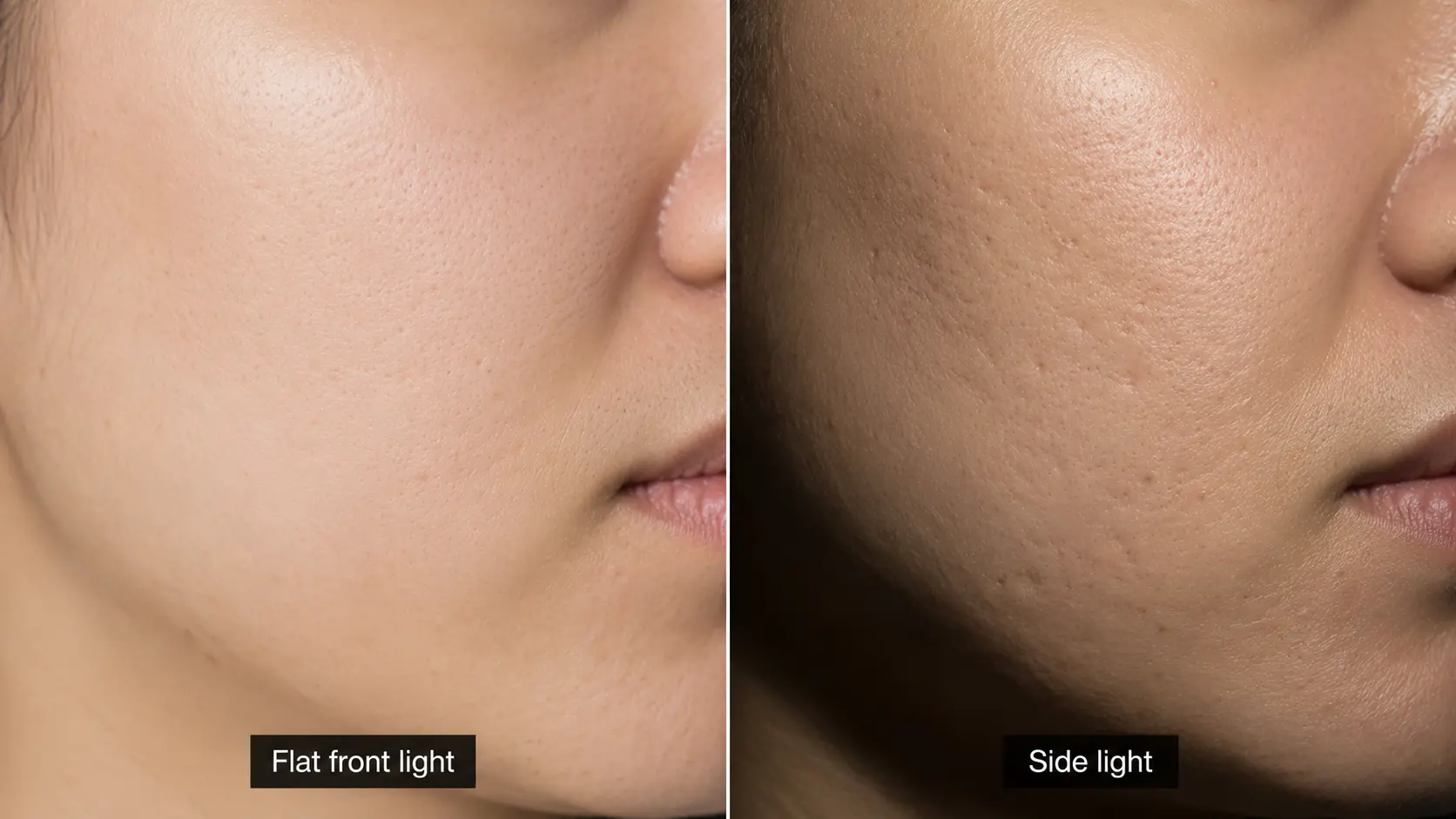
Use side lighting, not overhead or straight-on light. Bathroom ceiling lights and front-facing mirror lights flatten texture, which is exactly why your skin can look fine in one mirror and much worse in another. Stand near a window with the light coming from one side, or hold a lamp off to one side of your face. Texture that was invisible a moment ago shows up as small shadows.
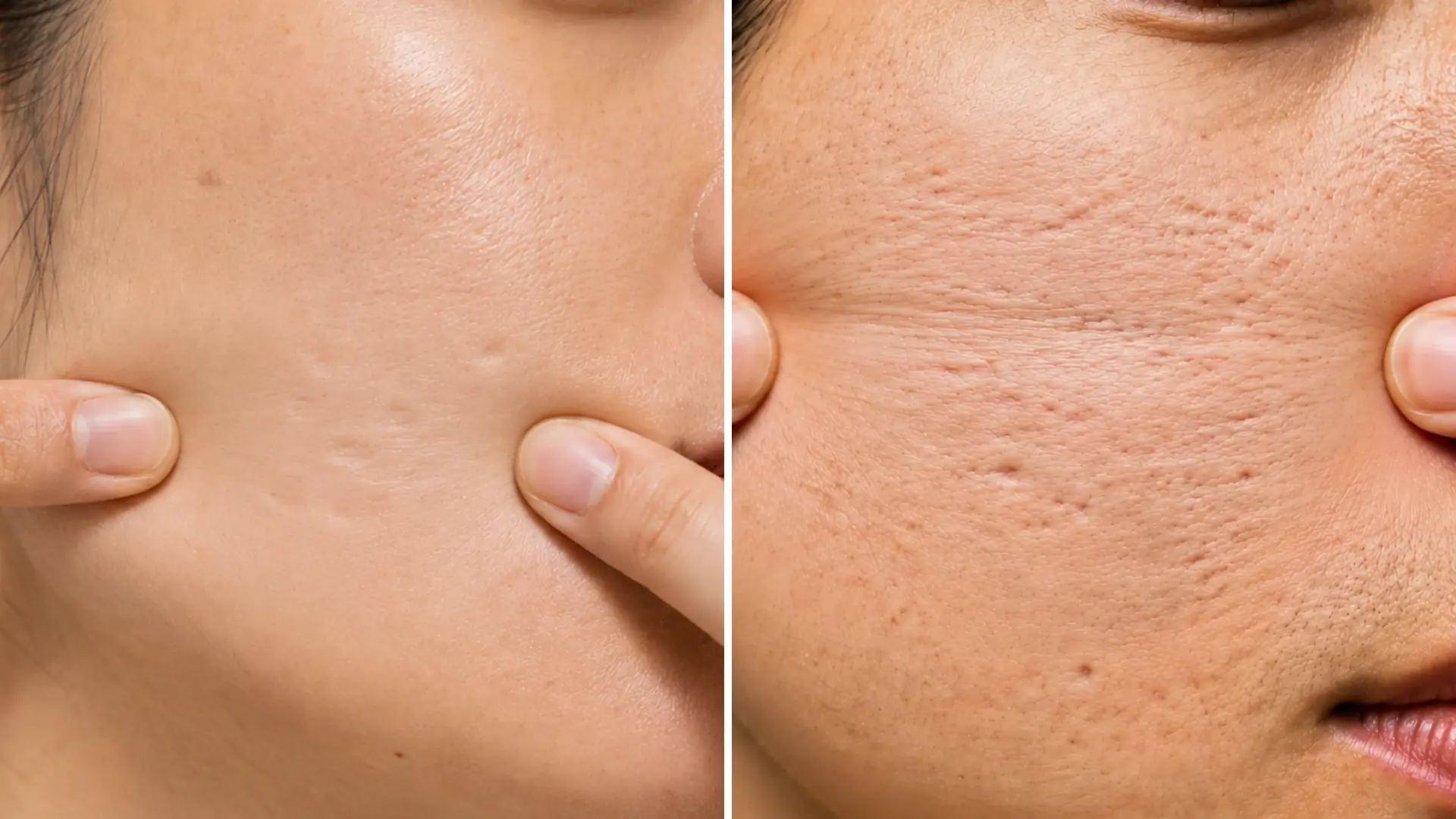
Then do the stretch test. Gently stretch the skin flat with two fingers on either side of a scar and watch what happens to the dip. Scars that shallow out noticeably or nearly disappear when stretched are usually being pulled down from underneath. Scars that keep their shape and sharp edges when the skin is taut are not.
Take a photo in that same light and angle. Acne scars change slowly enough that month-to-month memory is unreliable. One photo with consistent lighting is worth more than an impression.
Ice Pick Scars: Narrow and Deep
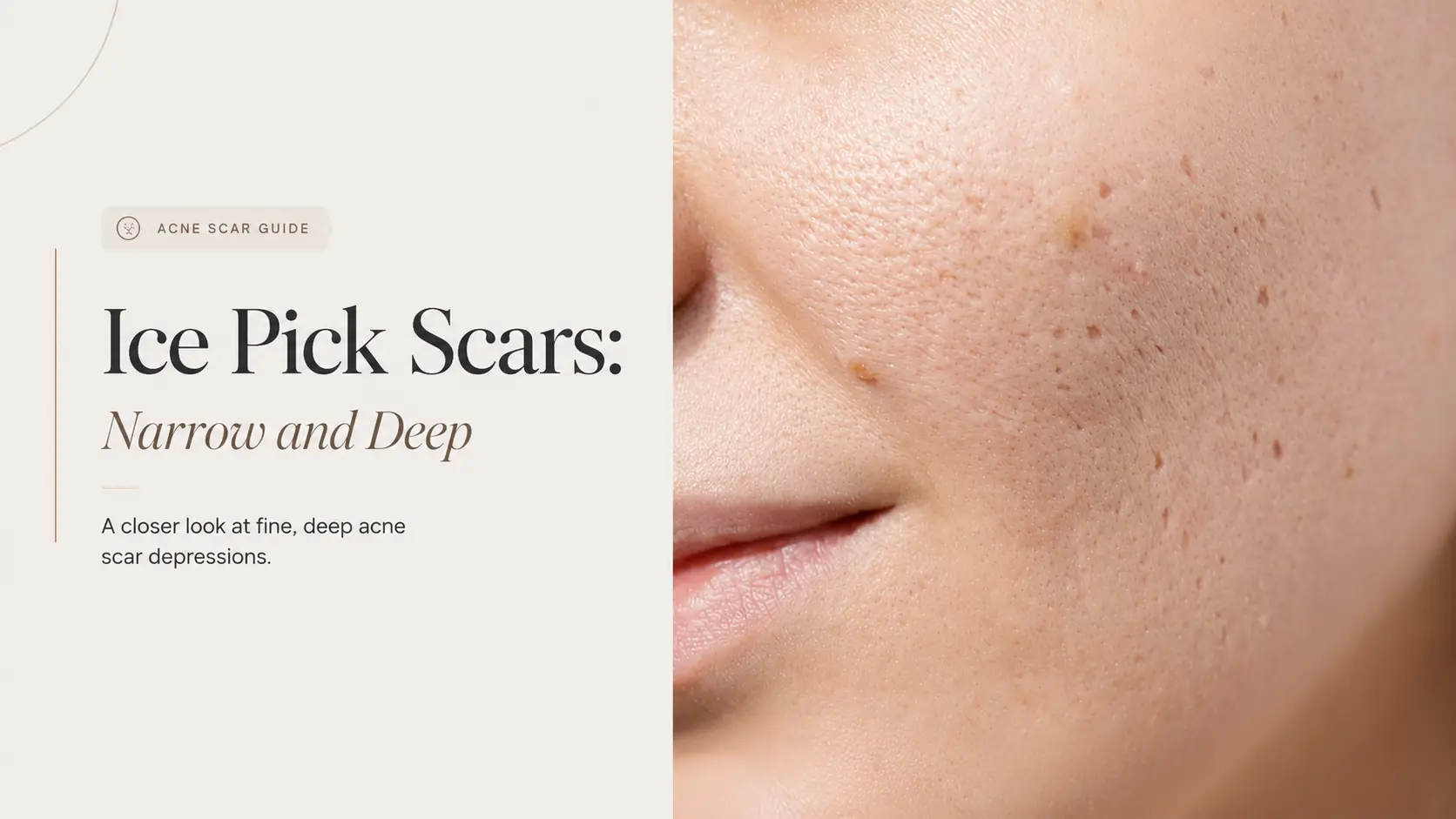
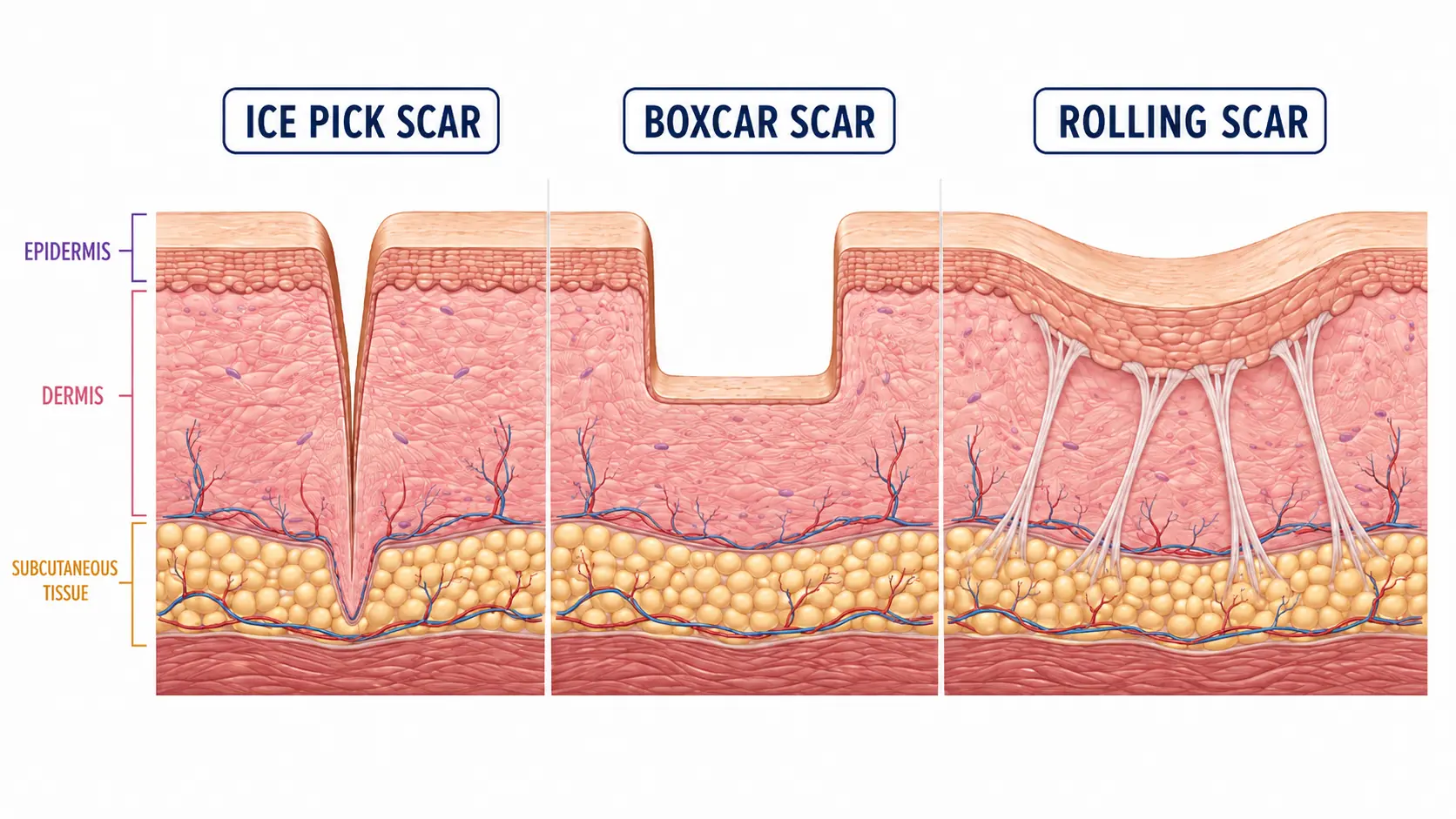
Ice pick scars are small and narrow at the surface but go deep, a bit like the skin was punctured with a fine point. They’re often described as looking like large, hollow pores, which is why they’re sometimes mistaken for enlarged pores at first glance.
The defining feature is the ratio: they’re deeper than they are wide. Under side lighting they read as small dark dots rather than broad shadows, and they don’t change much when you stretch the skin.
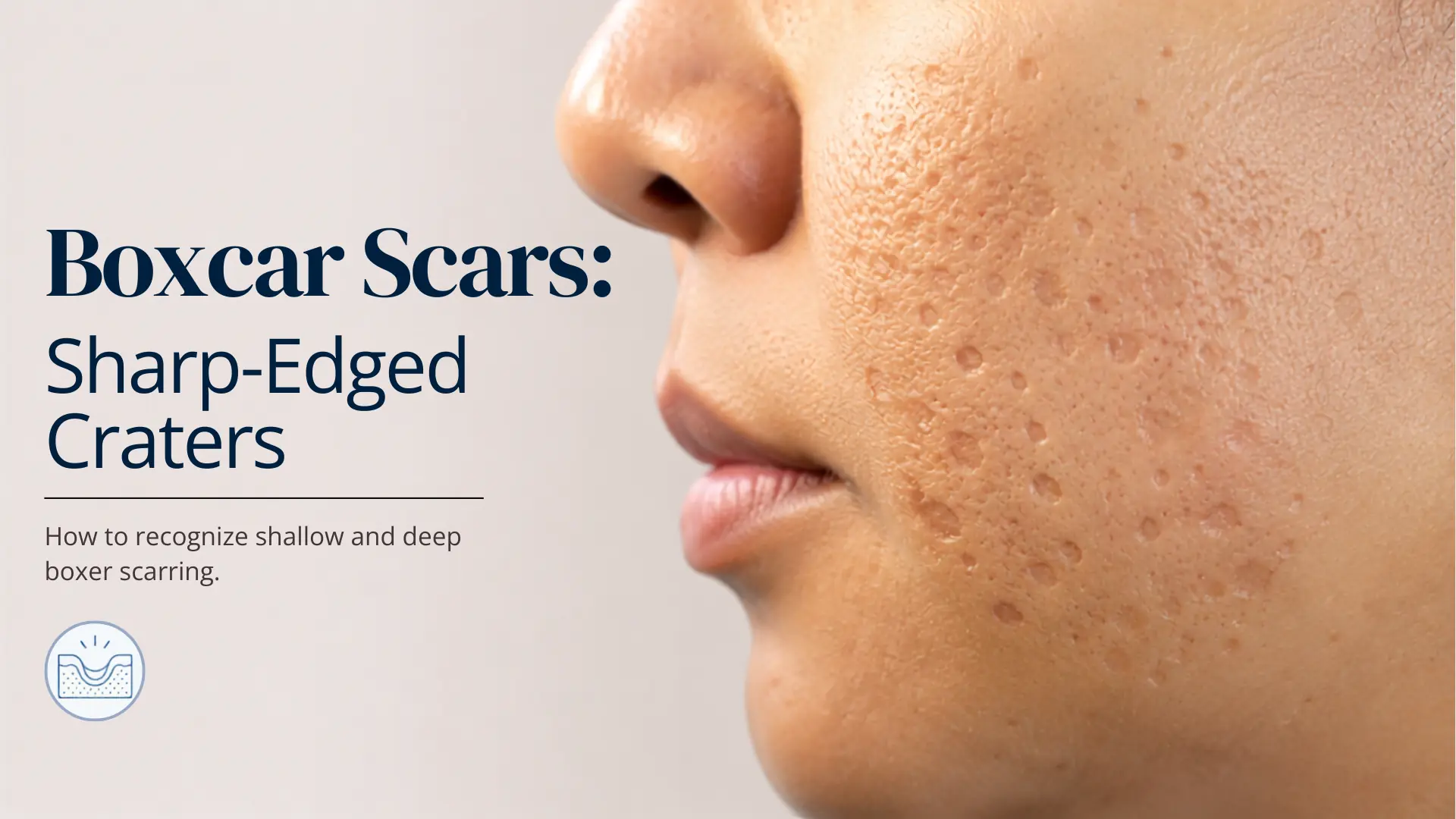
Boxcar Scars: Sharp-Edged Craters
Boxcar scars are round or oval with defined, steep edges, more like a small crater than a puncture. The base is usually flat and the walls drop away sharply, which is what makes the edge visible as a distinct line in angled light.
They vary a lot in depth. Shallow boxcar scars can be subtle, deep ones cast obvious shadows. Either way, the edges stay sharp when you stretch the skin, which is the clearest way to tell them apart from rolling scars.
Rolling Scars: Broad and Wavy
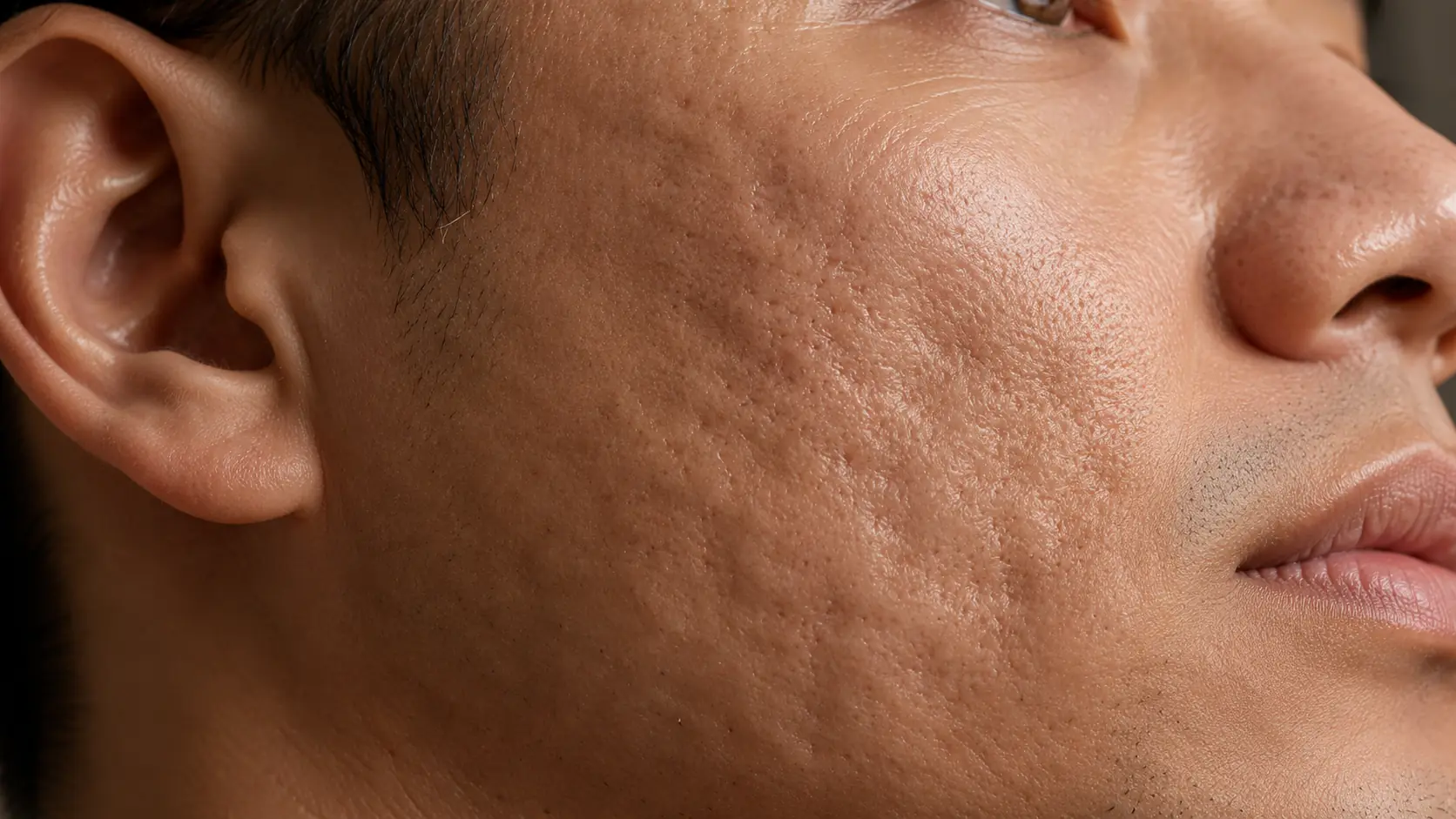
Rolling scars are wide with soft, sloping edges, and they give an area of skin an undulating or wavy look rather than showing up as individual marks. There’s often no clear border where the scar starts and stops.
These form when bands of tissue underneath tether the skin downward. That’s why they’re the type most likely to shallow out during the stretch test, and why they can look dramatically different depending on your expression or the angle of the light.
Most People Have a Mix
Very few people have only one type. It’s common to have ice pick scars across the cheeks, a few boxcar scars along the jaw, and some rolling texture over a broader area, all at once.
Individual scars can also sit between categories, a shallow boxcar scar with softened edges isn’t clearly one or the other, and that’s not a failure of your assessment. Self-checking is meant to orient you, not to produce a precise diagnosis. A doctor examining your skin in person will map this more accurately than you can in a mirror, and that mapping is what a treatment plan gets built from.
How to Tell Them Apart at a Glance
Swipe left to see all three types
Why the Type Matters
The shape of a scar determines what kind of approach has a chance of improving it, which is why two people with “acne scars” can be given completely different plans.
Broadly: narrow deep scars generally have to be dealt with one at a time, since treatments that work across the whole surface don’t reach the bottom of them. Broad, shallow texture responds better to approaches that resurface a whole area at once. And scars being tethered from underneath usually need that tethering addressed first, because smoothing the surface doesn’t help much while something is still pulling it down.
That’s the logic behind most treatment plans, and it’s also why most people end up needing more than one approach rather than a single procedure.
When Is a Scar “Final”?
Acne scars keep changing for a while after the breakout that caused them has healed. Skin continues remodeling for months, and a scar can soften noticeably during that time without any treatment at all, so what you see a few weeks after a breakout isn’t the final result.
Two things worth knowing before you start assessing seriously:
- Active acne usually needs to be under control first. Treating scars while new breakouts are still forming means new scars can appear in the same area, and some scar treatments aren’t appropriate on skin that’s actively breaking out.
- Give it time before judging severity. Assessing scars too early tends to overestimate how bad the final result will be, which can push people toward treatment they may not have needed as much of.
If you’re unsure whether what you’re seeing is settled or still changing, that’s a reasonable thing to ask about rather than guess at.
Not sure whether yours have settled yet?
Send a few photos taken in side lighting and we’ll get a doctor’s initial read on what you’re looking at. No appointment, no forms.