 Hospital
You You We, Go Go Go!
Corrective Jaw Surgery
Also known as:
- Underbite Surgery
- Overbite Surgery
Recovery
- Initial healing involves a liquid/soft food diet for several weeks
- Swelling and bruising gradually fade over 6–8 weeks
Considering Corrective Jaw Surgery?
Compare transparent pricing from vetted specialists in minutes.
About Corrective Jaw Surgery
Treated areas:
- Jaw
- Jawline
CORRECTIVE JAW SURGERY: Orthognathic Surgery
Function • Balance • Harmony | Restoring Comfort & Facial Beauty
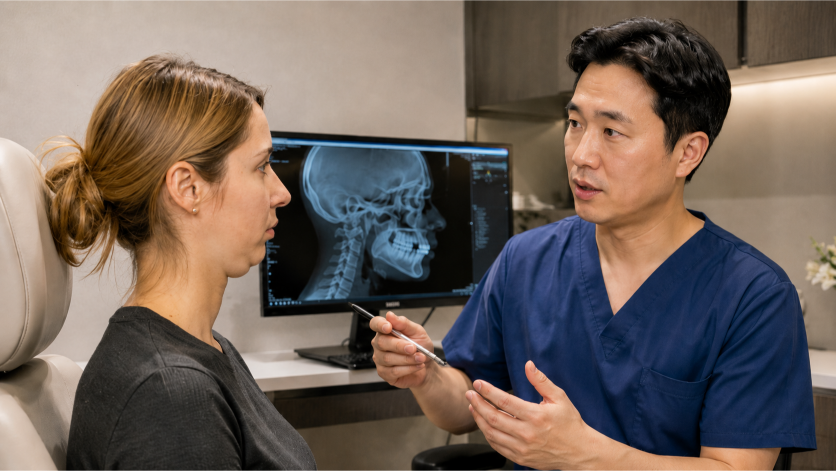
Corrective jaw surgery, also known as orthognathic surgery, realigns the upper and lower jaws to improve function, dental health, and facial appearance. Performed by specialist oral and maxillofacial surgeons, it corrects structural misalignments that cannot be fixed with braces alone. Treatment is usually combined with orthodontic care before and after surgery to ensure teeth and jaws fit perfectly together, delivering results that are both functionally effective and aesthetically balanced. It can also refine the jawline and reduce a wide or square jaw for a softer, more proportionate facial contour. The integration of virtual surgical planning has made what was once an unpredictable major operation into a highly precise process, allowing surgeons to simulate outcomes digitally and use 3D‑printed surgical splints to translate the plan into the operating room with millimetre accuracy.
What You Will Achieve
✅ Perfect Bite & Function: Corrects misalignment so teeth meet properly, making chewing and eating comfortable and efficient.
✅ Pain Relief: Eliminates chronic jaw pain, headaches, and discomfort linked to TMJ disorders.
✅ Clearer Speech: Proper jaw positioning improves pronunciation, articulation, and voice clarity.
✅ Balanced Facial Aesthetics: Fixes asymmetry, improves profile, softens a square jaw, and corrects gummy smile for natural, harmonious proportions.
✅ Better Breathing & Sleep: Opens the airway to reduce or resolve obstructive sleep apnoea and snoring.
✅ Improved Oral Health: Reduces abnormal wear on teeth and makes oral hygiene easier to maintain.
✅ Long‑Term Satisfaction: Results are stable, permanent, and highly satisfying for quality of life and appearance.
🩺 Types of Jaw Surgery
| Procedure | Purpose & Details |
|---|---|
| Maxillary Osteotomy (Upper Jaw Surgery) | Corrects an upper jaw that protrudes, is recessed, uneven, or positioned too high/low. Improves bite, smile line, mid‑face balance, and can reduce excessive gum show (gummy smile). |
| Mandibular Osteotomy (Lower Jaw Surgery / Square Jaw Correction) | Adjusts a lower jaw that juts forward, sits too far back, or is asymmetrical. Can also reduce excessive width or sharp angles to refine a square jaw into a slimmer, smoother contour. |
| Bimaxillary Surgery (Double Jaw Surgery) | Repositions both upper and lower jaws together. Used for complex or severe misalignments; balances the entire face profile, corrects open bite, and significantly improves airway function. |
| Genioplasty (Chin Surgery) | Reshapes or moves the chin forward, backward, or narrows its width. Often combined with lower jaw surgery to create a balanced, harmonious profile. |
Ideal Candidate
This procedure is suitable for adults and teens whose jaw growth is complete. You may be a candidate if you have:
- Skeletal Class II or Class III malocclusion (overbite or underbite)
- Open bite, crossbite, or asymmetric jaw alignment
- Gummy smile due to upper jaw position
- Obstructive sleep apnoea associated with a small or recessed jaw (retrognathia)
- Significant facial profile imbalance affecting both function and aesthetics
- Chronic jaw pain, TMJ dysfunction, or difficulty chewing, speaking, or breathing


Doctors Performing This

Your Timeline
Preparation
Pre-surgical orthodontics for 12-18 months (typically completed with home dentist). Stop blood thinners 14 days prior. No smoking 6 weeks before/after. CT scan and virtual surgical planning. Pre-op dental cleaning.
Followup Care
Inpatient stay 2-4 nights, IV fluids 24 hours then liquid diet 1-2 weeks then soft diet 4-6 weeks, oral antimicrobial rinse, jaw exercises from week 4, orthodontics resumes at 4-8 weeks, full bony healing at 6-12 months.
Frequently Asked Questions
Is the surgery painful?
Modern protocols provide excellent pain control, most discomfort relates to swelling rather than pain.
Will my facial appearance change significantly?
Yes, dramatic facial profile transformation, pre-operative virtual planning helps you visualise the expected outcome.
How does it differ from braces alone?
Braces only move teeth; surgery corrects the underlying jawbone position. Combined, they give full, stable correction for severe or structural issues that orthodontics alone cannot fix.
· Next Step
Interested in Corrective Jaw Surgery?
Connect with accredited specialists and get a personalised plan.