 Hospital
You You We, Go Go Go!
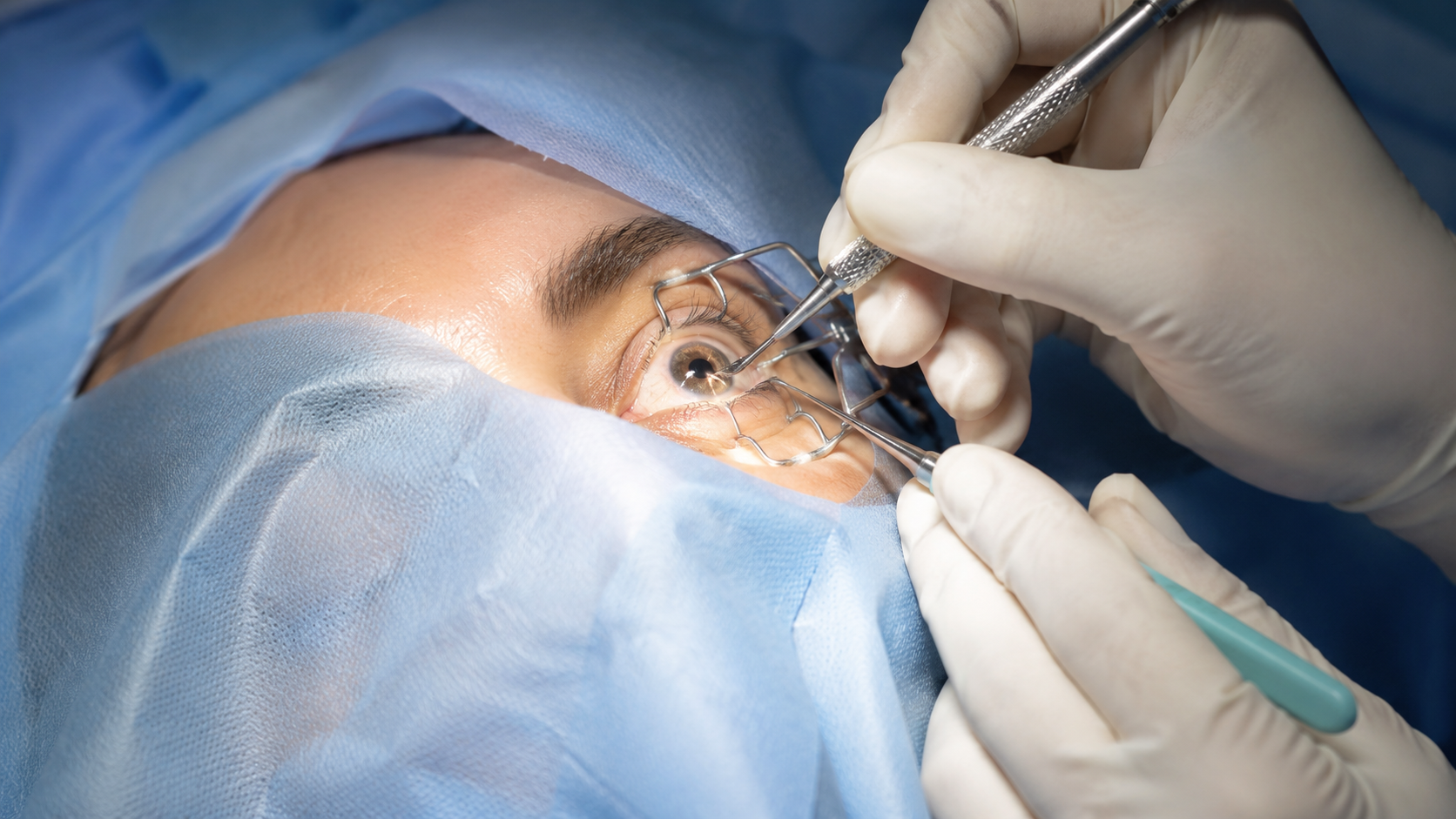
Cataract Surgery
Also known as:
- Lens Implant
- Vision Restoration
Recovery
- Most clients notice their vision starting to clear within 1–3 days
- You can typically return to your normal daily activities within one week
- Full healing and vision stabilization completed by 4–6 weeks
Considering Cataract Surgery?
Compare transparent pricing from vetted specialists in minutes.
About Cataract Surgery
Treated areas:
- Eyes
CATARACT SURGERY: Clear • Bright • Permanent
Reclaiming Your World in Full Color | Advanced Lens Restoration for Crystal-Clear Sight
Cataract surgery is a safe, highly successful, and life-changing procedure that replaces your eye’s cloudy natural lens with a clear, high-tech artificial one, known as an Intraocular Lens (IOL). If your vision feels like looking through a “foggy window,” this surgery is designed to eliminate that haze, restoring the sharpness, clarity, and vivid colors you’ve been missing.
What You Will Achieve
✅ Sharper, High-Definition Vision: Reclaims the fine details of faces, text, and landscapes that have become blurred over time.
✅ Brighter, Natural Colors: Removes the “yellowed” tint caused by cataracts, making the world appear vivid and bright again.
✅ Safer Night Driving: Significantly reduces the “halos” and glare from oncoming headlights, making you feel more confident behind the wheel.
✅ Greater Independence: Most patients achieve between 20/20 and 20/40 vision, drastically reducing or even eliminating the need for heavy glasses.
✅ A Permanent Solution: The new artificial lens is designed to last a lifetime, it will never develop another cataract or “wear out.”
Choosing Your Clear Vision (IOL Options)
| Lens Type | Primary Benefit | Best For |
| Monofocal | Crisp distance vision. | Driving and watching TV (reading glasses may be needed). |
| Toric | Corrects astigmatism. | Patients who want to fix blurry vision caused by an irregular eye shape. |
| Multifocal / EDOF | Full range of sight. | Those who want to see near, far, and in-between without glasses. |
Ideal Candidate
Suitable for adults (typically aged 50–60+) whose daily quality of life is being affected by lens clouding.
You are the perfect candidate if you:
- Feel like you are looking through a foggy or “smudged” window.
- Experience increased sensitivity to bright sunlight or indoor lights.
- Find that colors look dim, faded, or yellowed.
- Struggle to see clearly while driving at night due to glare.
- Have to change your glasses prescription more frequently than usual.
- Want a safe, permanent way to restore your visual freedom.
How It Is Performed
- Comprehensive eye examination and cataract assessment
- Optical biometry to determine optimal IOL power for target refraction
- Discussion of IOL options (monofocal, multifocal, toric, extended depth-of-focus)
- Informed consent and realistic expectation setting
- Patient positioning under operating microscope
- Dilating and numbing eye drops applied
- Small clear corneal incision (2.2-2.8 mm) created
- Capsulorhexis: opening of lens capsule front
- Phacoemulsification: ultrasonic probe breaks up cloudy lens
- Gentle aspiration removing lens fragments
- Polishing of lens capsule back
- Unfolded IOL insertion through incision
- IOL positioning in capsular bag
- Incision self-sealing or closure with micro-sutures
- Anti-inflammatory and antibiotic drops applied
Hospitals Offering This


Doctors Performing This


Your Timeline
Preparation
- Comprehensive pre-operative eye examination
- Corneal topography and biometry measurements
- Discussion and selection of IOL type
- Pre-operative bloodwork and medical clearance
- Discontinue blood-thinning medications per cardiologist guidance
- Avoid heavy lifting and eye rubbing for 1 week pre-op
- Arrange transportation (cannot drive immediately post-op)
Followup Care
- Protective eyeshield worn during sleep for first week
- Frequent prescribed eye drops (4-6 times daily) for first month, then tapering
- Avoid water on face for first 48 hours; shower carefully
- Avoid eye makeup for first week
- Avoid swimming and hot tubs for 2 weeks
- Avoid heavy lifting (>5-10 pounds) for first 2 weeks
- Avoid strenuous exercise for 2-3 weeks
- Sleep on back or non-operative side
- Avoid rubbing or pressing on eye
- Light activity resumable after 3-4 days; normal activity after 1-2 weeks
- Sunglasses recommended first 2 weeks (light sensitivity common)
- Follow-up appointments: 1 day, 1 week, 1 month, 3 months, 6 months, 1 year
Frequently Asked Questions
What IOL type should I choose?
Monofocal provides best distance vision; reading glasses needed for near. Multifocal provides distance and near vision with reduced glasses dependence but may cause glare/halos. Toric IOLs correct astigmatism. Extended depth-of-focus offers intermediate benefit. Discuss with surgeon based on lifestyle and vision priorities.
Will I still need glasses after cataract surgery?
This depends on IOL choice and pre-operative refractive error. Monofocal IOLs targeting distance vision require reading glasses. Premium IOLs reduce glasses need but may not eliminate it entirely.
How long do intraocular lenses last?
Modern IOLs are designed to last a lifetime. They do not deteriorate or require replacement in normal circumstances.
Can cataracts return after surgery?
The cloudy lens is completely removed; cataracts cannot recur. However, the lens capsule behind the IOL can become cloudy (posterior capsule opacification) in 10-20% of cases, treated with simple laser procedure (YAG capsulotomy).
Can I have LASIK after cataract surgery?
Yes, LASIK can be performed after cataract surgery to address residual refractive error or astigmatism. This is often planned in advance (targeting specific IOL power for cataract surgery, then LASIK fine-tuning).
· Next Step
Interested in Cataract Surgery?
Connect with accredited specialists and get a personalised plan.