 Hospital
You You We, Go Go Go!
Ptosis Correction
Also known as:
- Eyelid Ptosis Repair
Recovery
Initial swelling and bruising are normal for 1–2 weeks
Considering Ptosis Correction?
Compare transparent pricing from vetted specialists in minutes.
About Ptosis Correction
Treated areas:
- Eyes
PTOSIS CORRECTION: Restore Your Vision • Rejuvenate Your Gaze
Functional Lifting for Brighter, More Balanced & Alert Eyes
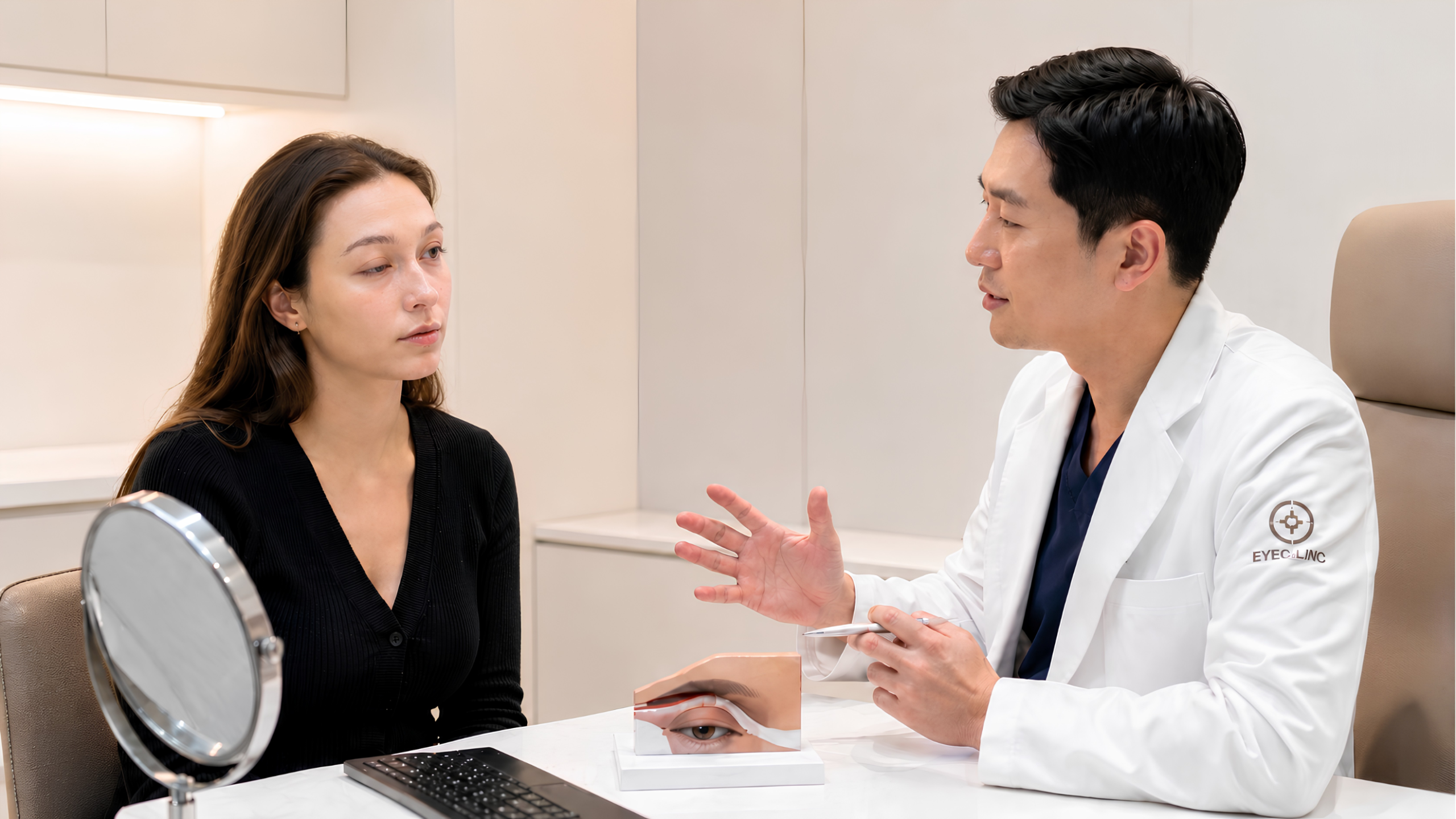
Ptosis correction is a specialized surgical procedure to fix drooping upper eyelids. By tightening or strengthening the levator muscle (the muscle responsible for opening the eye), the eyelid is lifted to its optimal height. This procedure is essential for both improving your field of vision and achieving a bright, “wide-awake” look.
What You Will Achieve
✅ Bigger, More Awake Eyes: Lifts the upper lid to reveal more of the eye, instantly removing a “sleepy” or heavy appearance.
✅ Restored Field of Vision: Clears your sight by lifting lids that obstruct your view, making daily tasks like driving and reading easier.
✅ Perfect Symmetry: Corrects uneven lids where one eye appears smaller or lower than the other, balancing your facial features.
✅ Reduced Forehead Tension: Eliminates the unconscious habit of lifting your eyebrows to see, which helps soften forehead wrinkles and reduces tension headaches.
✅ Youthful Expression: Provides a more alert and youthful facial profile by addressing age-related eyelid descent.
✅ Permanent Results: Provides a long-lasting anatomical improvement to the eyelid position and function.
✅ Restored Field of Vision: Clears your sight by lifting lids that obstruct your view, making daily tasks like driving and reading easier.
✅ Perfect Symmetry: Corrects uneven lids where one eye appears smaller or lower than the other, balancing your facial features.
✅ Reduced Forehead Tension: Eliminates the unconscious habit of lifting your eyebrows to see, which helps soften forehead wrinkles and reduces tension headaches.
✅ Youthful Expression: Provides a more alert and youthful facial profile by addressing age-related eyelid descent.
✅ Permanent Results: Provides a long-lasting anatomical improvement to the eyelid position and function.
Ptosis Correction vs. Double Eyelid Surgery
| Procedure | Focus | Primary Goal |
| Ptosis Correction | Function & Height | Strengthens the muscle to ensure the eyelid opens fully. |
| Double Eyelid Surgery | Crease & Definition | Creates or reshapes the eyelid fold for aesthetic beauty. |
Many patients choose to have both procedures performed together to achieve perfect functional lift and a beautiful, defined crease at the same time.
Ideal Candidate
Suitable for adults and children (congenital cases) seeking to restore eyelid function and aesthetics.
You are the perfect candidate if you:
- Have drooping eyelids that obstruct your vision or cause you to squint
- Experience congenital ptosis (drooping present since birth)
- Have age-related eyelid descent that makes you look tired or sad
- Have asymmetrical eyelids (one lid sits lower than the other)
- Frequently experience forehead strain from trying to keep your eyes open
- Seek a refreshed, alert eye appearance with a permanent surgical solution
Price by Region
| Location | Ranging from |
|---|---|
| Korea | 2,000,000 (KRW) |
| Thailand | 45,000 (THB) |
| China | 8,000 (RMB) |
| Indonesia | 22,800,000 (IDR) |
How It Is Performed
- Administer local anesthesia with possible light sedation
- Have patient open and close eyes to assess levator function
- Mark appropriate levator tightening points based on muscle strength assessment
- For external approach: create incision along eyelid crease, identify and tighten levator muscle
- For internal approach: access levator through inner eyelid conjunctiva without external incision
- Suture levator muscle at appropriate tension to achieve target eyelid height
- Test eye opening and symmetry intraoperatively
- Close incision with fine sutures or allow internal incision to close naturally
- Apply protective eye drops and ointment












































Your Timeline
Preparation
- Stop blood-thinning medications 1 week prior
- Remove contact lenses before surgery
- Avoid eye makeup
- Arrange transportation
- Discuss vision concerns and medical history with surgeon
Followup Care
- Use prescribed lubricating eye drops 4-6 times daily
- Apply cold compresses for first 48 hours
- Keep incision area clean and dry
- Attend suture removal at 5-7 days post-op
- Use artificial tears for 2-4 weeks to manage dry eye
- Sleep with head elevated
- Avoid eye strain during healing
Frequently Asked Questions
Will ptosis correction affect my ability to close my eyes completely?
No. The levator muscle controls opening; the orbicularis muscle controls closing. These are separate systems. Proper technique preserves full eye closure while improving opening.
Is internal or external ptosis correction better?
Both are effective. External approach allows direct muscle visualization but creates an incision. Internal approach avoids visible scars but offers less direct control. Your surgeon will recommend based on your anatomy and ptosis severity.
Can ptosis return after surgery?
Recurrent ptosis is possible (5-10% of cases) if the levator stretches again over time or if the initial correction was insufficient. Revision surgery can be performed if needed.
How is eyelid height determined?
Surgeons use precise measurements and intraoperative testing to determine optimal height. The goal is symmetry with your natural opposite eyelid and adequate vision clearance.
Can I combine ptosis correction with other eyelid procedures?
Yes, many patients combine ptosis correction with double-eyelid creation, under-eye bag removal, or canthoplasty in a single procedure for comprehensive eye rejuvenation.
· Next Step
Interested in Ptosis Correction?
Connect with accredited specialists and get a personalised plan.