
Non-Surgical Rhinoplasty & Nose Filler in Korea: Costs, Hiko Threads & Safety
Complete 2026 guide to non-surgical nose jobs in Seoul: HA nose filler vs. Hiko thread lift prices, vascular safety checks, and when surgery beats temporary treatments.
Key takeaways
- 2026 Seoul Pricing: Hyaluronic acid nose filler costs $180 to $510 USD (1cc), while dissolvable Hiko thread lifts run $360 to $1,000 USD.
- Great for Height, Not Reduction: Fillers and threads elevate low bridges and camouflage minor bumps cleanly, but cannot narrow wide nostrils or shrink a bulbous tip.
- High-Risk Zone Demands Doctor Safety: Always confirm a qualified physician injects personally using blunt cannulas with fresh hyaluronidase enzyme kept on site.
- Surgical Impact: Any residual HA nose filler must be dissolved with hyaluronidase 2 to 4 weeks prior to permanent surgical rhinoplasty.
- Avoid Repeat Over-Filling: Chronic top-ups risk widened 'Avatar bridge' migration, making permanent surgery cleaner long term for structural changes.
Nose filler (liquid rhinoplasty) in South Korea typically costs $180 to $510 USD (KRW 250,000 to 700,000) per session, while dissolvable Hiko nose thread lifts range from $360 to $1,000 USD (KRW 500,000 to 1,400,000). Performed in 15 to 25 minutes under topical numbing without general anesthesia or casts, non-surgical nose treatments appeal to visitors seeking subtle bridge height or mild tip lift with near-zero recovery downtime.
However, liquid rhinoplasty has strict anatomical and safety boundaries: adding hyaluronic acid gel or threads cannot narrow a wide bulbous tip, trim flared nostrils, or physically shave down a bony dorsal hump. Understanding when fillers or Hiko threads help, how to prevent dangerous vascular complications, and how temporary products affect future surgical rhinoplasty in Korea saves both money and nasal anatomy.
Non-Surgical Nose Job Options in Seoul: Nose Filler vs. Hiko Threads vs. Surgery
Korean dermatology and aesthetic clinics divide non-surgical nasal shaping into two main tools: cohesive hyaluronic acid dermal fillers that add localized gel volume, and barbed PDO or PCL scaffolding threads (widely marketed locally as Hiko or Tinkerbell nose lifts) that lift tip projection linearly.
| Feature | HA Nose Filler (Liquid Rhinoplasty) | Hiko / Nose Thread Lift (PDO / PCL) | Surgical Rhinoplasty (Details) |
|---|---|---|---|
| 2026 Seoul Price (USD) | $180 to $510 (1cc syringe) | $360 to $1,000 (6 to 12 threads) | $3,250 to $8,000 (see cost guide) |
| Clinic Visit & Downtime | 15 to 20 mins; mild 1 to 3 day swelling | 20 to 30 mins; 3 to 5 day swelling/tightness | 1.5 to 3.5 hrs OR; 7 to 10 day cast & stitch stay |
| What It Improves Best | Raising a low bridge radix & camouflaging small humps | Subtle tip elevation & linear bridge crispness | Every structure: hump reduction, bulbous narrowing, alarplasty, airway |
| Longevity | 9 to 18 months (varies by brand) | 12 to 24 months as collagen forms around threads | Permanent structural cartilage framework |
| Reversibility | Yes, immediately dissolvable via hyaluronidase enzyme | No simple dissolving injection; threads must absorb or be removed | Requires formal revision rhinoplasty |
For a broader side-by-side overview of surgical versus temporary reshaping, see our earlier companion guide on rhinoplasty vs. nose filler differences.
2026 Nose Filler Costs & Brand Comparison (Korean vs. Imported HA)
Seoul clinics separate dermal filler menus cleanly between MFDS-approved domestic Korean brands and imported Western FDA-cleared brands. Because the nasal dorsum requires a stiff, high-cohesivity gel (high G-prime) that holds a sharp vertical ridge instead of flattening sideways over months, brand selection directly impacts aesthetics.
- Korean Domestic High-Density Fillers ($180 to $300 USD / KRW 250,000 to 420,000 per cc): Popular choices include Yvoire Contour, Neuramis Volume, Chaeum Premium #4, and Elravie Deep Line. Well suited for first-time patients wanting budget-friendly 9 to 12 month bridge definition.
- Imported Western Fillers ($350 to $510 USD / KRW 480,000 to 700,000 per cc): Restylane Lyft, Juvederm Voluma, and Teosyal Ultra Deep offer predictable cross-linking density and lower lateral migration spread across 12 to 18 months.
- Avoid over-filling repeated touch-ups: Repeatedly topping up soft filler down the nasal bridge year after year frequently causes wide ‘Avatar nose’ spread along the nasal sidewalls.
Step-by-Step: What Happens During a 20-Minute Gangnam Nose Filler Session
Legitimate Korean aesthetic clinics follow a strict sterile sequence rather than rushing blind injections:
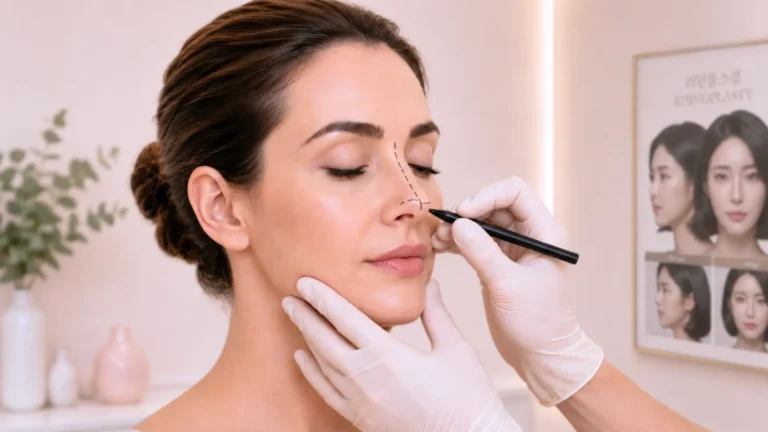
- Standardized photography & marking: Your doctor marks bony dorsal irregularities, radix starting point, and safe midline entry depth under bright overhead lighting.
- Numbing protocol: Topical anesthetic cream sits 15 to 20 minutes along the bridge and infratip lobule; many fillers also contain lidocaine for smoother comfort.
- Unopened syringe unboxing: Always watch the nurse or doctor unseal the authentic manufacturer syringe box and show you the expiration date and volume markings.
- Cannula sculpting & capillary check: Using a single micro-entry point, the physician threads a blunt cannula smoothly down the periosteal layer, molds tiny incremental aliquots upward, and tests tip skin capillary refill for several minutes before clearing you.
What Is a Hiko Nose Thread Lift (and What About ‘Tinkerbell’ Lifts)?
Hiko (combining the Korean words for high + nose) inserts tiny absorbable barbed PDO (polydioxanone) or longer-lasting PCL threads along the nasal dorsum and vertically down the columella tip via a small blunt needle puncture. Clinics occasionally pair gentle tip threads with a tiny amount of tip rotation under brand nicknames like Tinkerbell nose lifts.
Compared with HA filler alone, threads hold a narrower crisp bridge edge without turning gel-wide laterally. However, threads cannot narrow wide nostril cartilage structurally, and aggressive multi-thread stacking creates internal scar capsules that complicate later surgical revision.
PDO vs. PCL vs. PLLA Thread Materials Used in Seoul
- PDO (Polydioxanone): Soft dissolvable surgical suture material clearing naturally within 6 to 9 months; lowest tissue reactivity and ideal for cautious first-time bridge trials.
- PCL (Polycaprolactone): Pliable longer-acting polymer lasting 18 to 24 months while stimulating gradual Type I/III collagen around each thread track; slightly firmer long-term palpability.
- Thread count moderation: Reputable Korean doctors typically use 6 to 10 smooth or cogged scaffolds rather than packing 20+ dense threads into the tip skin where stiff tension can cause thread tip protrusion or skin dimpling.
Want an honest opinion on whether filler, threads, or surgery makes sense? Share your photos with BeautsGO to compare advice from both board-certified dermatologists and rhinoplasty surgeons in Seoul.
Critical Vascular Safety Rules for Nose Fillers in Seoul
Because blood vessels supplying the nasal tip and retina connect through the dorsal nasal and angular arteries near the bridge and glabella, the nose is medically classified as the highest-risk injection zone on the face. Rare intravascular injection can cause localized skin necrosis or vision loss if missed.
- Doctor-only injection verification: Confirm an experienced physician performs the placement personally after assessing previous trauma or surgical scars (prior rhinoplasty alters arterial paths and raises vascular risk).
- Use of blunt-tip micro-cannulas & slow aspiration technique: Many Gangnam dermatologists use 23G to 25G blunt cannulas along the midline avascular periosteal plane rather than blind sharp-needle boluses.
- Immediate in-room hyaluronidase availability: Only undergo nasal filler at medical clinics stocking fresh hyaluronidase enzyme vials on site capable of reversing arterial occlusion within minutes.
- Avoid permanent synthetic fillers: Never allow non-dissolvable silicone oil, PMMA, or polyacrylamide injections into the nose.
Warning Signs After Nose Filler Requiring Immediate Emergency Review
Typical post-injection tenderness resolves cleanly over 24 hours. Seek immediate same-day clinical evaluation if you notice sudden escalating throbbing pain once numbing wears off, pale white or mottled purple-grey patchy skin blanching across the nose or glabella, small white pustules by Day 2, or any visual blurring or eye pain. Do not wait until returning home overseas if skin color looks abnormal; rapid high-dose hyaluronidase flushing within the first hours dramatically improves tissue recovery.
How Nose Fillers & Hiko Threads Affect Future Surgical Rhinoplasty
A common misconception among travelers is that trying nose filler before surgery leaves zero trace. While hyaluronic acid dissolves cleanly, surgical planning shifts slightly if you later decide on permanent nose reshaping:
- Dissolve HA filler 2 to 4 weeks before surgery: Residual gel inflates skin thickness artificially, preventing your rhinoplasty surgeon from seeing true bone contours during 3D CT planning and pre-op measurements. Clinics routinely administer hyaluronidase at least 14 to 21 days prior to surgical rhinoplasty.
- Scar capsule timing after Hiko threads: Heavy PDO or PCL thread placement leaves fibrous collagen tracts along the bridge and columella. Inform your surgeon honestly so they budget surgical clearance time to extract residual non-absorbed fragments smoothly.
Who Should Choose Non-Surgical Nose Enhancement vs. Real Surgery?
Use the decision matrix below to avoid paying multiple rounds of temporary clinic visits when your anatomical goal actually calls for surgery.
| Patient Goal | Recommended Path in Seoul | Why It Works (or Fails) |
|---|---|---|
| Slight dorsal bridge boost before a wedding or short Seoul trip | Nose Filler or Light Hiko Threads | Minimal 1 to 3 day swelling; safe quick trial of bridge shadow line |
| Camouflaging a tiny superficial bridge dent | Controlled Micro-Drop HA Filler | Evens minor surface contour smoothly without bone fracture |
| Refining a thick bulbous tip or wide nostrils | Surgical Rhinoplasty / Alarplasty | Adding filler or threads into a bulbous tip only makes it bigger |
| Fixing a large hawk nose hump or crooked deviated nose | Surgical Rhinoplasty | Requires bone osteotomy and septal straightening, never added volume |
| Seeking permanent 10+ year height without repeated fees | Surgical Rhinoplasty | Three to four rounds of premium filler + threads approach surgical costs |
Verified Seoul Clinics Offering Nose Fillers, Hiko Threads & Surgery
For safe medical-grade non-surgical nose enhancements or honest comparisons against surgery, explore verified clinics across Seoul such as Blessing Dermatology (Dr. Kang Jin-Hee), Gold J Clinic (Dr. Lee Hyun Joo), MADE U Clinic, and Elev Clinic, alongside full surgical rhinoplasty hospitals including VG Plastic Surgery (Dr. Young Min Im) and AB Plastic Surgery.
5-Point Clinic Safety Checklist Before Same-Day Nose Injections
- Demand sealed single-syringe unboxing: Verify the Korean MFDS safety holographic sticker, lot number, and exact product name before drawing any numbing cream.
- Confirm licensed doctor administration: Ensure a dermatologist or plastic surgeon performs every pass personally after inspecting nasal tip capillary refill.
- Ask whether hyaluronidase is kept in the treatment room: Even cautious blunt-cannula placements require immediate emergency enzyme availability.
- Disclose all prior nasal fillers, threads, or surgeries: Hidden scar bands alter dorsal artery paths and raise intravascular complications drastically.
- Obtain a written product card & itemized KRW receipt: Record exact gel brand, total cc placed, and thread count so any future rhinoplasty surgeon has accurate records.
5-Year Cost Math: Repeat Non-Surgical Sessions vs. One-Time Primary Surgery
Budget-conscious patients sometimes start with non-surgical treatments assuming they save thousands over surgical rhinoplasty. While one session of domestic HA filler ($180 to $300 USD) or Hiko threads ($360 to $1,000 USD) feels low-commitment upfront, repeating imported bridge filler plus thread touch-ups every 12 to 15 months across 5 years commonly reaches $2,400 to $4,200 USD in cumulative fees, approaching the starting price of permanent primary surgery while carrying repeated vascular and scar-capsule risks. For patients wanting lifelong height without chronic upkeep, consulting verified surgeons directly often delivers superior long-term value.
7-Day Aftercare Do’s & Don’ts After Liquid Nose Job or Thread Placement
| Daily Activity | Safe Recovery Timing | Clinical Reason |
|---|---|---|
| Sleeping flat vs. elevated | Sleep face-up, slightly elevated for 3 nights | Prevents side pillow compression from shifting fresh HA filler or Hiko threads off the midline |
| Wearing eyeglasses or sunglasses | Avoid heavy bridge pressure for 7 to 14 days | Nose pads indent soft malleable hyaluronic acid along the upper radix bridge |
| Alcohol, saunas & intense gym workouts | Pause for 48 to 72 hours | Heat and facial blood pressure spikes amplify injection-site bruising and localized edema |
| Makeup & gentle face cleansing | Keep sterile pinpoint dot clean 24 hrs; resume makeup Day 2 | Protects cannula puncture entry site along tip from bacteria before skin closes |
Compare Safe Clinic Options Before Your Appointment in Seoul
Whether you want a 20-minute non-surgical dorsal lift during a short holiday or want transparent advice comparing temporary filler against permanent rhinoplasty in Korea, always start with a doctor-led evaluation and authentic single-syringe MFDS product verification. Before booking your Gangnam appointment, bring clear details about any previous dermal filler brands or Hiko threads placed within the past 3 years, confirm whether a walk-in VAT-inclusive quote covers follow-up checkups before your return flight, and never stack multiple clinics’ temporary nose injections on top of older unresolved gel.
Browse BeautsGO’s vetted Seoul clinics or reach our team directly for $0 coordination, direct counter billing in Seoul, and transparent pricing.
Medical Disclaimer: Nasal filler and thread lifts carry uncommon but serious vascular risks. Suitability, brand selection, and dosing require live medical assessment by a qualified physician.
Frequently asked questions
How much does non-surgical rhinoplasty (nose filler) cost in South Korea?
What is a Hiko nose lift or Tinkerbell nose thread lift?
Can nose filler or threads make a wide or bulbous nose smaller?
Are liquid nose jobs safe, and what is the biggest risk?
Can I get surgical rhinoplasty later if I already had nose filler or Hiko threads?
How soon can I fly after getting nose filler or Hiko threads in Seoul?
Mentioned in this guide
12 items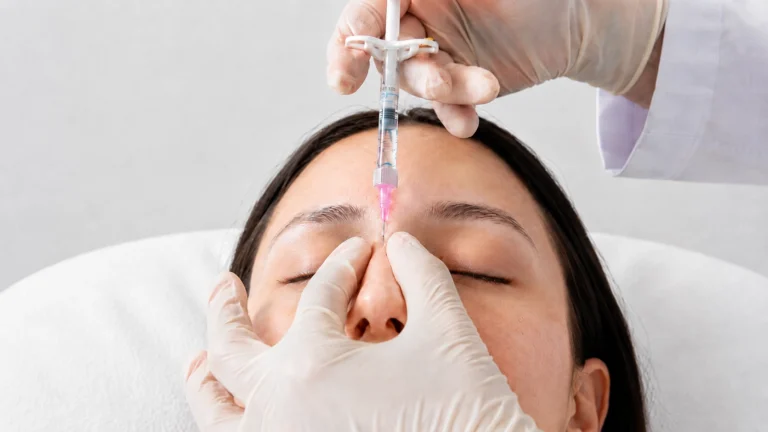 Procedure
Dermal Filler
Restores lost volume instantly. Smooths lines, folds & hollows. Enhances lips, cheeks & contours. Defines jawline, chin & profile. Lifts sagging areas gently. Boosts hydration & collagen. Natural look, no downtime. Reversible & customizable.
View procedure
 Procedure
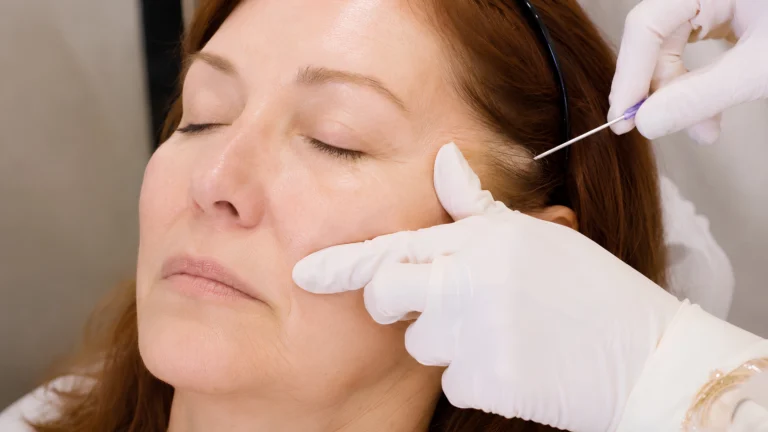
Thread Lift
Instant lifting of sagging skin. Non-surgical facelift alternative. Triggers natural collagen growth. Sharpens jawline and cheekbones. Minimally invasive; local anesthesia. Short recovery and downtime. Uses safe, dissolvable threads. Natural-looking rejuvenation results.
View procedure
 Procedure
Rhinoplasty
Reshapes size, bridge & tip. Straightens crooked nose. Removes bumps/humps. Narrows wide nose/nostrils. Balances facial proportions. Improves breathing & airflow. Corrects structural issues. Natural, permanent results.
View procedure
 Doctor · Korea
Dr. Kang Jin-Hee
Director / Chief Dermatologist · Blessing Dermatology
View doctor
 Doctor · Korea
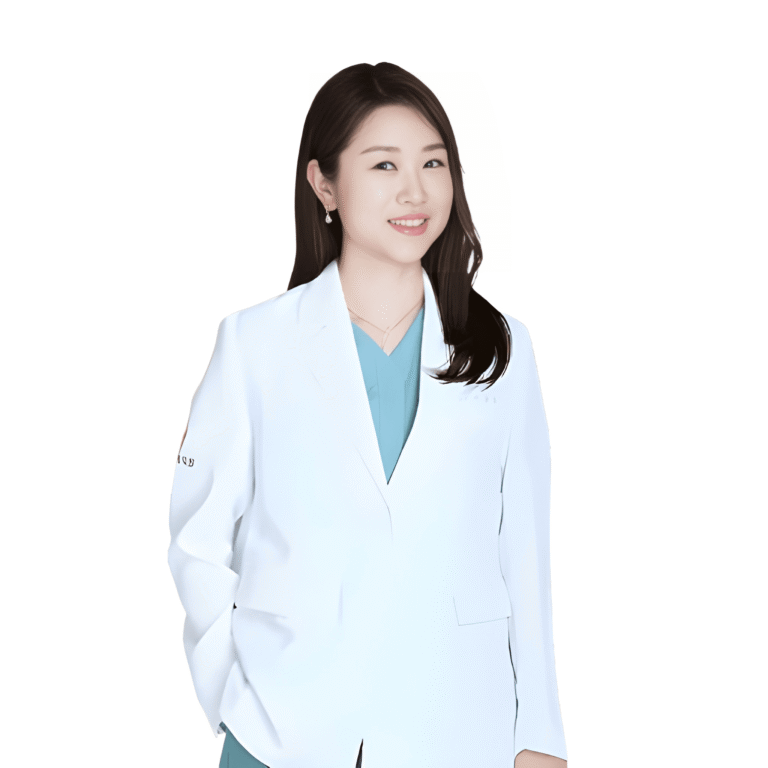
Dr. Lee Hyun Joo
Medical Director · 15+ years · Gold J Clinic
View doctor
 Doctor · Korea
Dr. Young Min Im
CEO / Chief Plastic Surgeon · 15+ years · VG Plastic Surgery
View doctor
 Hospital · Seoul
Blessing Dermatology
Aesthetic/Dermatology · BeautsGO verified
View hospital
 Hospital · Seoul
Gold J Clinic
Aesthetic/Dermatology · BeautsGO verified
View hospital
 Hospital · Seoul
MADE U Clinic
Aesthetic/Dermatology · BeautsGO verified
View hospital
 Hospital · Seoul
Elev Clinic
Aesthetic/Dermatology · BeautsGO verified
View hospital
 Hospital · Seoul
VG Plastic Surgery
Plastic Surgery Aesthetic · BeautsGO verified
View hospital
 Hospital · Seoul
AB Plastic Surgery
Plastic Surgery Aesthetic · BeautsGO verified
View hospital
More from the Journal
All articlesMedical disclaimer: This content is for informational purposes only and is not a substitute for professional medical advice, diagnosis, or treatment. Read our full Medical Disclaimer.