SMAS Facelift in Korea: Why Choose Dream Korea Hospital? Surgeon Expertise, Estimated Costs and International Patient Consultation
Key takeaways
- Deep Structural Rejuvenation. Unlike skin-only tightening, a surgical SMAS facelift repositions the deeper fibromuscular support layer beneath the skin to address sagging cheeks, jowls, and loss of jawline definition.
- Tailored Facial-Lifting Options. Dream Korea Hospital offers Multi-layer Restoration Face Lifting, Non-incisional SMAS Lifting, forehead lifting, eyebrow lifting, and neck lifting based on individual anatomical needs.
- Estimated Korea Market Costs. Broad planning estimates for a SMAS facelift in South Korea range from ₩6,000,000 to ₩15,000,000 (approx. US$4,400 to US$10,950), with final quotations confirmed after an in-person surgical examination.
- Multilingual Overseas Patient Support. Online pre-travel consultations and interpretation in English, Chinese, Japanese, Russian, Vietnamese, and Thai can be arranged via WhatsApp (+82 10 9232 9888).
Are you considering a SMAS facelift in South Korea to restore a firmer jawline, improve sagging cheeks and achieve a more refreshed appearance?
South Korea is a well-known destination for plastic surgery and facial rejuvenation. For patients researching facelift surgery in Seoul, choosing the right surgeon involves more than comparing prices. Surgical qualifications, experience, procedure planning, safety standards and postoperative care are all important considerations.
Dream Korea Hospital offers facial rejuvenation procedures, including Multi-layer Restoration Face Lifting and Non-incisional SMAS Lifting. Its published medical profiles also feature specialist plastic surgeons with academic and professional backgrounds in South Korea.
Whether you are concerned about jowls, loose skin, sagging facial tissues or age-related changes in your facial contours, an individual consultation can help establish which surgical or non-surgical options may be suitable for you.
For direct booking and a one-to-one consultation with Dream Korea Hospital, WhatsApp +82 10 9232 9888.
1. What Is a SMAS Facelift?
A SMAS facelift is a surgical facial rejuvenation procedure that targets the superficial musculoaponeurotic system (SMAS), a fibrous and muscular tissue layer beneath the skin that contributes to facial support.
As we age, the skin loses elasticity and facial tissues gradually descend. This can result in sagging cheeks, jowls, deeper folds around the mouth and a less-defined jawline.
Unlike approaches that focus primarily on tightening the skin, a surgical SMAS facelift addresses the underlying supporting tissues as well. Depending on the technique, the surgeon may reposition these tissues and remove or redrape excess skin.
The intended result is a firmer, more refreshed appearance that respects the patient’s natural facial structure.
A SMAS facelift may be considered for patients experiencing:
- Sagging cheeks and lower-face tissues
- Jowls along the jawline
- Loss of jawline definition
- Loose skin around the lower face
- Age-related facial descent
- Facial folds associated with sagging tissues
However, a facelift does not address every sign of ageing. Skin pigmentation, fine lines, volume loss and under-eye concerns may require different procedures or treatments.
A qualified plastic surgeon should assess your facial anatomy, medical history and expectations before recommending surgery.
2. Why Choose Dream Korea Hospital for Facial Rejuvenation?
When considering plastic surgery overseas, patients should evaluate the medical team, the available procedures and the support provided throughout the surgical process.
Dream Korea Hospital is associated with an established plastic surgery practice in South Korea. Its published services include several facial-lifting options, giving patients different procedures to discuss during consultation.
A. Dedicated Facial-Lifting Procedures
Dream’s published anti-ageing services include:
- Multi-layer Restoration Face Lifting
- Non-incisional SMAS Lifting
- Forehead Lifting
- Eyebrow Lifting
- Neck Lifting
These procedures address different facial areas and concerns. A patient with pronounced jowls may need a different approach from someone whose primary concern is the forehead or neck.
This range provides a starting point for a more individualised discussion about facial rejuvenation.
Patients should ask the medical team to explain the precise technique, expected benefits, limitations, risks and recovery requirements of the recommended procedure.
B. Surgeon Qualifications and Specialist Background
One of the most important factors in facelift surgery is the experience and qualifications of the individual surgeon who will perform the operation.
Dream’s published doctor profiles include board-certified plastic surgeons with specialist training and academic backgrounds associated with institutions such as Seoul National University and Samsung Medical Center.
For example, the published profile of Dr. Tony YangSoo Park lists an MD and PhD from Seoul National University College of Medicine, alongside professional and academic affiliations.
These credentials are relevant when evaluating a surgeon’s background. However, patients should also confirm the surgeon’s current qualifications, experience with their specific facelift technique and responsibility for their operation.
Before proceeding, ask:
- Who will personally perform my surgery?
- Is the surgeon board-certified in plastic surgery?
- How much experience does the surgeon have with SMAS facelifts?
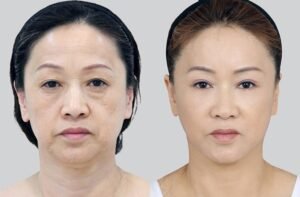
- Can I review genuine before-and-after cases involving patients with similar concerns?
- What complications can occur, and how are they managed?
- Who will oversee my postoperative care?
A strong consultation should provide clear answers rather than relying on general claims of expertise.
C. A Broader Approach to Facial Ageing
Facial ageing does not affect everyone equally. Some patients experience lower-face sagging, while others are more concerned about the neck, forehead or eyebrows.
Dream’s listed facial-lifting services allow these areas to be discussed individually.
The objective should not be to undergo the largest possible procedure. It should be to identify the approach that is medically appropriate for your facial anatomy and personal goals.
D. Consultation Options for International Patients
Patients travelling from overseas may need to organise their surgical plan before arriving in Korea.
Dream provides online consultation options and publishes information about multilingual support for international patients. These services can help patients enquire about the consultation process and communicate their concerns.
A preliminary online assessment can assist with planning, although it cannot replace a complete medical assessment or guarantee surgical suitability.
3. The Importance of Specialist Plastic Surgery Expertise
A facelift is a technically demanding surgical procedure because it involves facial anatomy, tissue repositioning, skin management and careful surgical planning.
The surgeon must consider the patient’s facial proportions, skin elasticity, degree of tissue descent, previous procedures and desired outcome.
A procedure that works well for one person may not be appropriate for another.
When evaluating Dream Korea Hospital, consider the following areas of expertise and care:
- Facial anatomy and surgical planning: The proposed technique should be based on your individual facial structure rather than a standardised surgical package.
- Relevant surgical experience: Ask how often the surgeon performs the particular facelift procedure being recommended.
- Realistic surgical expectations: A responsible surgeon should explain what surgery can improve, what may remain and what results cannot be guaranteed.
- Patient safety: Ask about anaesthesia, preoperative examinations, the surgical facility and arrangements for managing complications.
- Postoperative care: Confirm how wound care, scheduled reviews and follow-up will be handled, particularly if you live outside South Korea.
A surgeon’s qualifications are an important starting point, but they should be considered together with procedure-specific experience, safety practices and the quality of the consultation.
4. SMAS Facelift vs Multi-Layer Restoration Face Lifting
Patients researching Korean facelift surgery may encounter several procedure names. Understanding the differences is essential before deciding.
SMAS Facelift
A surgical SMAS facelift involves incisions and repositioning of the deeper supporting tissues. Depending on the technique, it may improve jowls, sagging cheeks and lower-face definition.
It may be suitable for selected patients with more pronounced tissue descent, but suitability depends on an individual medical assessment.
Multi-Layer Restoration Face Lifting
Dream lists Multi-layer Restoration Face Lifting among its facial-rejuvenation services.
During consultation, ask the surgeon which tissue layers are addressed, how the technique is performed, how it differs from a conventional SMAS facelift and what outcomes may realistically be expected.
The procedure name alone is not enough to determine its suitability or effectiveness.
Non-Incisional SMAS Lifting
Dream also lists Non-incisional SMAS Lifting.
A non-incisional approach should not automatically be considered equivalent to a surgical facelift. The mechanism, expected degree of lifting and duration of results depend on the specific technique.
Ask whether the procedure is surgical or non-surgical, what it involves, what results are realistic and whether it is appropriate for the degree of sagging you are experiencing.
The most appropriate option is the one that addresses your concerns while taking your medical needs, risks and expectations into account.
5. International Patients: Who Travels to Dream Korea Hospital?
South Korea attracts international patients seeking plastic surgery, aesthetic procedures and facial rejuvenation. Dream has an established international patient service offering and publishes information about multilingual assistance.
Its listed interpretation languages include:
- English
- Chinese
- Japanese
- Russian
- Vietnamese
- Thai
Multilingual support can be helpful for patients who need to explain their medical history, discuss their facial concerns and understand postoperative instructions in a language they are comfortable with.
Dream’s published international activities and connections have also included markets such as China, Japan, Singapore, the United States and Dubai.
These international connections indicate a broader international presence; they should not be interpreted as a verified list of the countries of origin of patients who have undergone facelift surgery.
For prospective patients from Malaysia, Singapore, Indonesia, Thailand, China, Japan and other countries, it is worth contacting the hospital directly to ask about consultation arrangements, interpretation services and support for overseas visitors.
If you are travelling to Korea for a facelift, confirm the following before making arrangements:
- Whether online consultation is available
- Which languages can be supported during your consultation
- What medical records or photographs are required
- How long you should remain in Korea
- How postoperative reviews will be arranged
- What support is available after you return home
International patient services can make the process easier to navigate, but your surgical decision should ultimately be based on medical suitability, the surgeon’s qualifications and a clear understanding of the proposed procedure.
6. SMAS Facelift Cost in Korea: Estimated Prices in KRW and USD
One of the most common questions from international patients is: How much does a SMAS facelift cost in South Korea?
The price depends on the surgeon, surgical technique, complexity of the case, anaesthesia, surgical facility and whether additional procedures are required.
The following figures are indicative market estimates for budgeting, not confirmed Dream Korea Hospital prices. For ease of comparison, the USD conversions use an illustrative exchange rate of approximately ₩1,370 per US$1. Actual exchange rates fluctuate, and the final amount may differ.
| Procedure | Estimated Cost (KRW)* | Estimated Cost (USD)* |
|---|---|---|
| Mini Facelift | ₩3,000,000–₩8,000,000 | US$2,200–US$5,800 |
| SMAS Facelift | ₩6,000,000–₩15,000,000 | US$4,400–US$10,950 |
| Deep Plane Facelift | ₩11,000,000–₩28,000,000 | US$8,000–US$20,450 |
| Neck Lift | ₩3,000,000–₩9,000,000 | US$2,200–US$6,600 |
| Facelift with Additional Procedures | ₩12,000,000–₩29,000,000+ | US$8,750–US$21,200+ |
*Important Pricing Note (Terms and Conditions Apply): These figures are broad market planning estimates only and do not represent confirmed quotations or an official Dream Korea Hospital price list. USD conversions are approximate and subject to exchange-rate fluctuations. Terms and conditions apply. The final price can only be confirmed after an in-person consultation and clinical examination with the surgeon at the hospital, and may be higher or lower depending on surgical technique, case complexity, anaesthesia, facility charges, and package inclusions.
Key Factors That Influence Your Final Quotation
Several clinical and logistical factors influence the final surgical quotation:
- The surgical technique: A mini facelift, SMAS facelift and deep plane facelift involve different approaches and levels of surgical complexity.
- The degree of facial sagging: Patients requiring more extensive tissue repositioning may need a different surgical plan from those with milder changes.
- The surgeon and surgical facility: Professional fees, facility charges, anaesthesia and the complexity of the operation influence the total price.
- Additional procedures: Combining a neck lift, forehead lift or blepharoplasty with a facelift increases the total cost and affects surgical recovery.
- Postoperative care: Clarify which preoperative examinations, medications, dressings and follow-up visits are included in the quoted amount.
For a personalised SMAS facelift quotation, WhatsApp Dream Korea Hospital at +82 10 9232 9888.
7. What Happens During a SMAS Facelift Consultation?
A thorough consultation should establish your goals and determine whether surgery is appropriate.
The medical team may review your facial proportions, skin elasticity, medical history, medications, previous aesthetic procedures and degree of tissue sagging.
Photographs may be requested for an initial assessment, but they cannot replace a full medical evaluation.
During your consultation, discuss:
- Your main concerns and desired outcome
- The surgeon’s recommended technique
- The benefits and limitations of the procedure
- Potential complications and anaesthesia risks
- The expected recovery timeline
- The total cost and package inclusions
- Postoperative care and follow-up arrangements
Ask for explanations in a language you understand and take time to consider the information before deciding.
8. SMAS Facelift Recovery: What Should International Patients Expect?
Recovery varies according to the surgical technique, extent of surgery and individual healing.
Swelling, bruising, tightness, discomfort and temporary numbness may occur. Some patients need several weeks before feeling comfortable returning to normal social activities, while residual swelling may take longer to settle.
Before travelling to South Korea, discuss your itinerary with the treating surgeon.
Ask how long you should remain locally, when postoperative examinations will take place and when it may be safe to fly home. Your surgeon should make that decision based on your recovery rather than a standard timetable.
After surgery, follow your medical team’s instructions regarding wound care, medication, activity restrictions and follow-up. Seek prompt medical attention for concerning symptoms.
For patients returning overseas, clarify who to contact if a problem develops after leaving Korea and how further medical assessment can be arranged.
9. How Long Do SMAS Facelift Results Last?
A SMAS facelift may provide long-lasting improvement in facial contours, but it does not stop the natural ageing process.
The duration and appearance of the result depend on the surgical technique, facial anatomy, skin quality, healing and other individual factors.
No surgeon can guarantee an exact duration or a particular aesthetic result.
A realistic surgical plan should focus on appropriate improvement, facial harmony and long-term expectations rather than promises of permanent youth.
Book Your SMAS Facelift Consultation at Dream Korea Hospital
Choosing a facelift is a significant personal decision. The right starting point is a detailed medical consultation that considers your facial anatomy, desired improvements, medical history and recovery expectations.
Dream Korea Hospital’s published facial-rejuvenation services, specialist medical profiles and international patient support provide a starting point for patients researching facelift surgery in South Korea.
If you are considering a SMAS facelift, Multi-layer Restoration Face Lifting or another facial rejuvenation procedure, discuss your concerns directly with the medical team before making a decision.
Ready to explore your options in Seoul?
Dream Korea Hospital: Direct Booking & One-to-One Consultation
Contact the hospital to discuss your facial concerns, ask about the treating surgeon’s experience, confirm the current procedure price and arrange a consultation.
Frequently asked questions
Is a SMAS facelift suitable for everyone?
Is a SMAS facelift better than a mini facelift?
Does Dream Korea Hospital offer non-surgical lifting?
How much does a SMAS facelift cost in Korea?
What is the actual SMAS facelift price at Dream Korea Hospital?
Can international patients enquire before travelling?
How do I book a one-to-one consultation?
Mentioned in this guide
02 items Procedure
Facelift & Neck Lift
Lifts sagging jowls and tightens the lower face. Removes excess neck skin and tightens muscles. Redefines the jawline and sharpens the profile. Smooths deep wrinkles and folds around the mouth. Provides a natural, non-surgical “pulled” look. Long-lasting results (typically 10+ years). Single surgery/recovery for full lower-face harmony. Permanently restores youthful facial contours.
View procedure
 Hospital · Korea
Dream Plastic Surgery
Plastic Surgery Aesthetic · BeautsGO verified
View hospital
More from the Journal
All articles- Rhinoplasty Materials in Korea: Silicone vs Cartilage, Safety & How Long They Last | VG Plastic Surgery Seoul
-
 Plastic Surgery in Korea: Premium Procedures, Estimated Prices & View Korea Hospital | Free BeautsGO Coordination
- DIAR Skin Clinic Seoul, Korea (2026): Anti-Aging, Acne Scars, Pigmentation, Skin Lifting & Treatment Prices
Medical disclaimer: This content is for informational purposes only and is not a substitute for professional medical advice, diagnosis, or treatment. Read our full Medical Disclaimer.